
Philippine Culture · School Life
Flag Ceremony Every Monday: The Filipino School Rituals Every Student Remembers
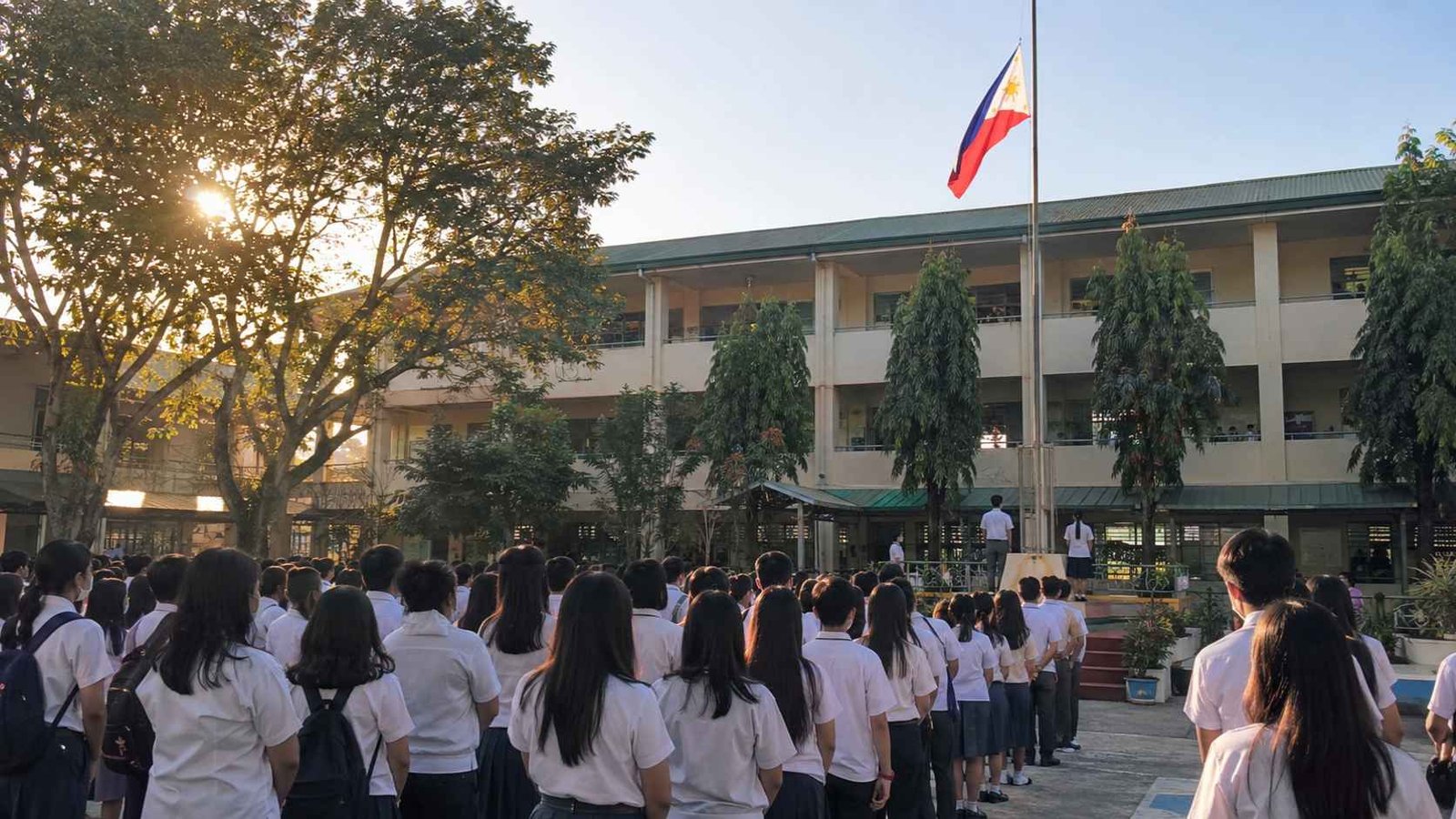
Lining up by height under the morning sun, singing Lupang Hinirang with your hand over your heart, then rushing to class for "Good morning, Ma'am!" These are the rituals that shaped generations of Filipino students, and here is the story behind each one.
Key Takeaways
- The Monday flag-raising and Friday flag-lowering ceremonies in schools are required by Republic Act No. 8491, the Flag and Heraldic Code of the Philippines.
- Lupang Hinirang was first played as an instrumental march in 1898, and the law requires it to be sung in Filipino.
- Classroom habits like chorus greetings, cleaners' duty and "one whole sheet of paper" are informal rituals that nearly every Filipino student shares.
- Yearly events such as Nutrition Month, Buwan ng Wika and Teachers' Day connect school life to national culture.
For millions of Filipinos, the school week never really started with the first class. It started in the quadrangle, standing in a straight line by section, waiting for the flag to rise. Years later, many adults can still sing every word of the national anthem and recite the patriotic pledge without missing a beat.
These routines can feel ordinary while you are living them, but they carry history, law and values that go back more than a century. Let's look at where they came from and why they remain part of Philippine education today.
Part 1
Why Schools Raise the Flag Every Monday
The Monday flag ceremony is not just a school tradition. It is written into national law. Republic Act No. 8491, known as the Flag and Heraldic Code of the Philippines, was signed in 1998, the year the country celebrated the centennial of its independence.
What the law says: RA 8491 directs all government offices and educational institutions to hold a flag-raising ceremony every Monday morning and a flag-lowering ceremony every Friday afternoon. The same law sets rules for how the flag is displayed and how the national anthem is played and sung.
This is why public and private schools across the country follow the same weekly rhythm. Government offices follow it too, so some parents may be attending their own flag ceremony at work at the same moment their children are attending one at school.
Fun fact: Under the Flag Code, the flag should be raised briskly and lowered slowly and ceremoniously. Next time you watch a flag ceremony, notice the difference in speed.
Part 2
What Happens During a Flag Ceremony
Details vary from school to school, but most Monday ceremonies follow a familiar order. If you went to school in the Philippines, this sequence will probably feel like muscle memory.
- 1
Assembly by section
Students line up in the quadrangle or covered court by grade and section, often arranged from shortest to tallest. Class advisers stand nearby to keep the lines straight.
- 2
Raising the flag with Lupang Hinirang
Everyone stands at attention, faces the flag and places the right palm over the left chest. The flag rises as the national anthem is sung, often led by a student conductor or the school band.
- 3
The pledge
Students recite the Panatang Makabayan, the patriotic pledge that begins "Iniibig ko ang Pilipinas." Many schools also recite the Panunumpa ng Katapatan sa Watawat, the Pledge of Allegiance to the Philippine Flag.
- 4
Prayer and school hymns
Many schools follow with an opening prayer, a regional or division hymn, and the school hymn, which students often learn by heart in their first weeks.
- 5
Announcements and recognitions
The principal or teachers share news for the week, remind students about upcoming activities and sometimes recognize contest winners in front of the whole school.
- 6
Friday flag lowering
At the end of the week, a shorter ceremony takes the flag down, bringing the school week to a respectful close.
Part 3
The Story of Lupang Hinirang
The national anthem students sing every Monday has a fascinating history. It began without any words at all.
Composer Julián Felipe wrote the music in 1898 at the request of General Emilio Aguinaldo. It was played as an instrumental march on June 12, 1898, when Philippine independence was proclaimed in Kawit, Cavite. A year later, the poet José Palma wrote a Spanish poem titled "Filipinas," which became the anthem's first lyrics.
Over the decades, the lyrics were translated into English and later into Filipino. The Filipino version sung in schools today was adopted in the 1950s and revised in the 1960s. Under RA 8491, the anthem must be sung in the national language, following Julián Felipe's original musical arrangement.
Did you know? The Flag Code describes how to behave when the anthem plays: stand at attention, face the flag, and place your right palm over your left chest. That is the same posture students learn in kindergarten.
Part 4
What the Philippine Flag Means
Students see the flag every week, but not everyone remembers what each part stands for. Here is a quick refresher.
▬
Blue stripe
Peace, truth and justice.
▬
Red stripe
Patriotism and valor.
◀
White triangle
Equality and fraternity.
☀️
Golden sun
Its eight rays represent the eight provinces that first rose up against Spanish rule: Manila, Cavite, Bulacan, Pampanga, Nueva Ecija, Bataan, Laguna and Batangas.
★
Three stars
Luzon, Visayas and Mindanao, the country's three major island groups.
⇅
Flipped in war
The Philippine flag is displayed with the red stripe on top during a state of war, a feature that makes it unusual among national flags.
Part 5
Classroom Rituals We All Remember
After the flag ceremony, a whole new set of unwritten rules took over. None of these appear in any law, yet they are shared by students from Batanes to Tawi-Tawi.
🙋
"Good morning, Ma'am!"
When the teacher walks in, the class stands and greets in a slow, sing-song chorus, sometimes followed by "Good morning, classmates." It is one of the first routines children learn in school.
📄
"One whole sheet of paper"
Every Filipino student knows the paper sizes: one whole, one-half crosswise, one-half lengthwise and one-fourth. Borrowing a sheet from a seatmate is practically a rite of passage.
🧹
Cleaners of the day
Students take turns as "cleaners," sweeping, arranging chairs and wiping boards before going home. In many schools, the floor was waxed and polished with a bunot, a dried coconut husk.
🍱
Recess and baon
Your baon, the food or allowance brought from home, decided your recess. Many students spent it at the school canteen or the sari-sari store just outside the gate.
👔
Uniforms and IDs
Pressed uniforms, black shoes and school IDs worn around the neck are standard in most schools. Some even have a separate uniform for P.E. days.
🤸
Morning exercise
Some schools follow the flag ceremony with group calisthenics or dance exercises in the quadrangle, getting everyone moving before class.
Part 6
The School-Year Calendar of Traditions
Beyond the weekly routine, the school year is marked by celebrations that tie classrooms to national culture. Many of them come with costumes, contests and programs that students remember long after graduation.
| When | Celebration | What students usually do |
|---|---|---|
| July | Nutrition Month | Cooking contests, healthy food fairs and poster making. July was declared Nutrition Month by Presidential Decree No. 491 in 1974. |
| August | Buwan ng Wika | Students wear Filipiniana or traditional attire and join poetry, essay and declamation contests celebrating the national language. |
| Sept–Oct | Teachers' Month | Students honor their teachers with cards, flowers and programs, ending with National Teachers' Day on October 5. |
| October | United Nations Day | Many schools hold costume parades where students represent different countries. |
| December | Christmas Party | Gift exchanges, "Monito-Monita" games, potluck food and class performances before the holiday break. |
| End of year | Recognition and Moving Up | Honor students receive medals and certificates, and graduating classes march to the tune of their chosen songs. |
Part 7
Why These Rituals Still Matter
It is easy to dismiss school routines as simple habits, but they quietly teach lessons that last a lifetime. Educators often point to these values as the real purpose behind them.
🇵🇭
Love of country. Singing the anthem every week makes national identity a regular part of life, not just a holiday topic.
⏰
Discipline and punctuality. Arriving before the flag rises builds a habit of being on time.
🤝
Respect. Greeting teachers and standing for the flag teach courtesy toward people and shared symbols.
🧺
Shared responsibility. Cleaners' duty reflects the spirit of bayanihan, where everyone helps take care of the community.
This is why so many Filipinos, years after leaving school, feel a familiar tug when they hear the opening notes of Lupang Hinirang. The rituals became part of who they are.
🏫 Quiz: How Well Do You Remember?
Eight quick questions about the flag ceremony, Lupang Hinirang and Filipino school life. Can you score a perfect 8?
Frequently Asked Questions
Is the flag ceremony required in Philippine schools?
Yes. Republic Act No. 8491, the Flag and Heraldic Code of the Philippines, directs educational institutions and government offices to hold a flag-raising ceremony every Monday morning and a flag-lowering ceremony every Friday afternoon.
Who composed Lupang Hinirang?
Julián Felipe composed the music in 1898. The first lyrics came from José Palma's Spanish poem "Filipinas," written in 1899. The Filipino lyrics used today were adopted later and are required by law when the anthem is sung.
What is the Panatang Makabayan?
It is a patriotic pledge recited by students during flag ceremonies. It expresses love for the Philippines and a promise to serve the country and its people.
What is the proper way to stand during the national anthem?
Stand at attention, face the flag, and place your right palm over your left chest. Uniformed personnel follow their own salute rules.
Why do Filipino students greet their teachers in chorus?
It is a classroom custom that teaches respect and order. It is not required by law, but it is practiced in schools across the country and is one of the most familiar memories of Filipino school life.
Keep Learning Every Day
Missed the thrill of a classroom quiz? Test yourself with fresh questions on history, science, geography and current events, updated daily.
Play Bing Quiz TodaySchool practices vary by region and institution. For official guidelines, refer to the Department of Education and the full text of Republic Act No. 8491.