
Texting Capital of the World: How Filipinos Turned SMS Into a Lifestyle
Before Messenger and Viber, a whole nation lived inside 160 characters. From one-peso texts and "pasaload" to a protest that helped topple a president, here is how the Philippines made the humble text message its own.
The Philippines earned the nickname "texting capital of the world" in the late 1990s and 2000s, when cheap prepaid SMS made texting far more affordable than calling. By 2007, Filipinos were reportedly sending around one billion text messages a day. Texting shaped how Filipinos talked, flirted, did business, sent money, and even protested, most famously during EDSA II in January 2001.
A nation that fell in love with 160 characters
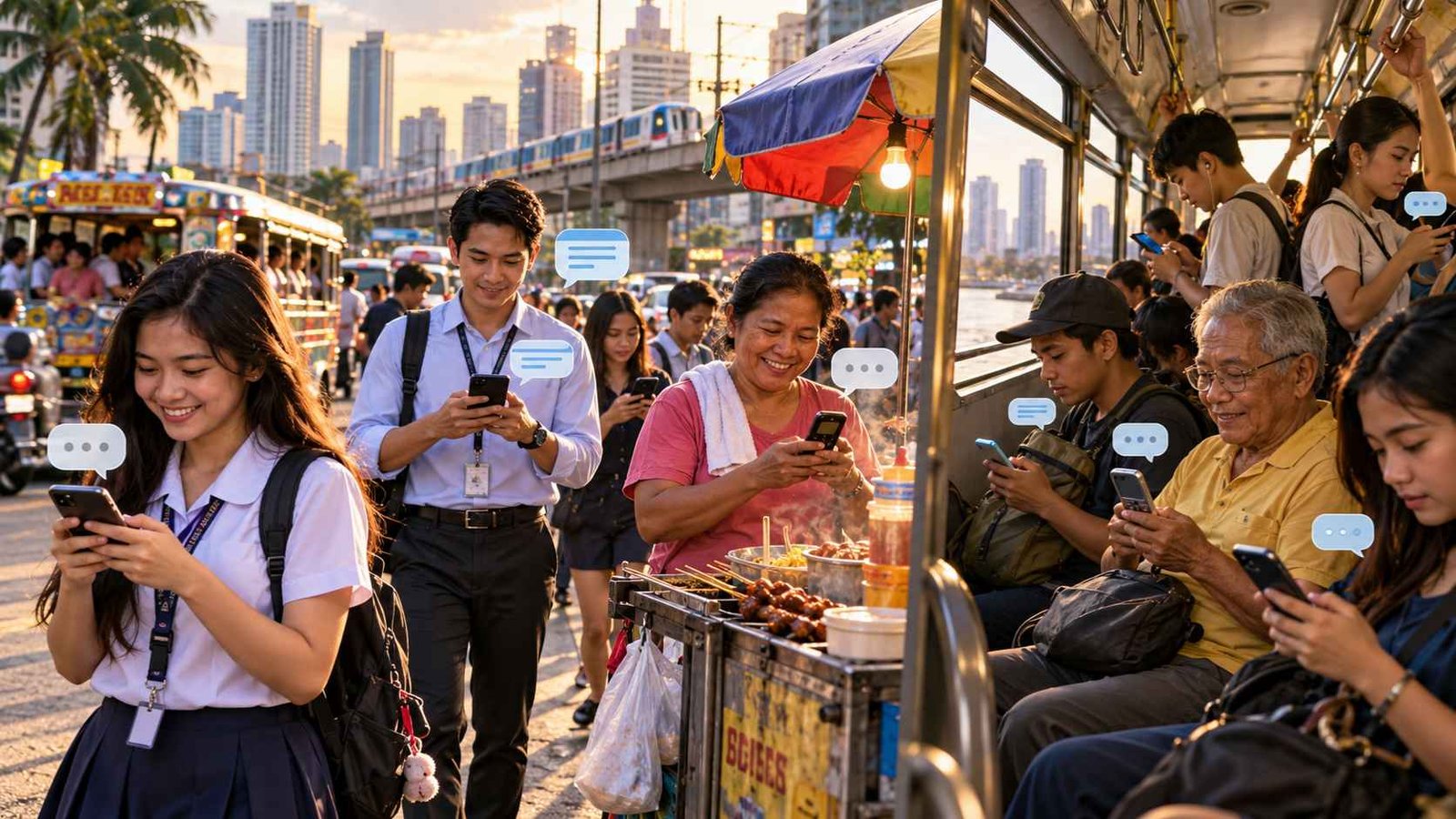
Ask any Filipino who grew up in the late 1990s or 2000s about their first phone, and you will probably hear about a sturdy Nokia, a thumb that could type without looking, and an inbox that was always "full." Texting wasn't just a feature. It was the main reason to own a phone.
SMS, short for Short Message Service, arrived in the Philippines through the GSM networks of the 1990s. Around 1998, the operators began actively promoting it, and Filipinos took to it with remarkable speed. Within a few years, text messages were flowing at a scale that astonished the telecom world.
Visitors noticed it immediately: jeepney passengers, office workers, students and street vendors all bent over small screens, thumbs tapping. People texted greetings, jokes, prayers, gossip, love notes and news. The country soon picked up a nickname it wore proudly: the texting capital of the world.
Why the Philippines, of all places?
Lots of countries had mobile phones. Few embraced texting the way Filipinos did. Several forces lined up at the same time.
Calls were costly, while a text cost a fraction of that. By the early 2000s, a standard text was about one peso, and prepaid cards often came bundled with free texts.
Filipinos often buy in small amounts, like single sachets at the sari-sari store. Prepaid load worked the same way: top up a little, text a lot, and avoid monthly bills.
One academic study estimated that in 2001 the country had about 12 million mobile phone users, while fewer than one percent of Filipinos owned a computer. For many, the phone was the first personal connection device.
Filipinos value staying in touch: the daily kumustahan, the "ingat" before a trip, the group greeting to the barkada. Texting made constant, low-cost contact possible.
Millions of Filipinos work overseas. Text messages, and services that bridged computers and phones, helped families stay close across oceans and time zones without the cost of long international calls.
Txtspk: a whole language in 160 characters
Why 160? The limit dates back to 1985, when German engineer Friedhelm Hillebrand, working on the GSM standard, tested ordinary messages and found that most fit comfortably within 160 characters. The world's first SMS, "Merry Christmas," was sent in the United Kingdom in December 1992.
Filipinos turned that tight limit into a creative challenge. Messages shrank into clever abbreviations, often mixing English and Tagalog in the same line. Vowels vanished, numbers replaced syllables, and a smiley could end almost any message.
Around 2010, an exaggerated style called "jejemon" took this further, with deliberately scrambled spelling, extra letters and mixed capitals. It drew plenty of teasing, but it showed how inventive Filipino texters had become.
Can your message fit in one text?
A standard SMS holds 160 characters. Longer messages are split into parts, which leaves about 153 characters per part.
EDSA II: when a text message moved a crowd
The most famous moment in Philippine texting history came in January 2001, during the impeachment trial of President Joseph Estrada. On the night of January 16, senators voted 11–10 against opening an envelope believed to contain key bank evidence. Anger spread fast, and a lot of it spread by text.
Messages were forwarded from phone to phone, urging people to gather at the EDSA Shrine, the site of the 1986 People Power Revolution. Within hours, crowds began arriving. Over the next four days, the protest grew to hundreds of thousands, with some estimates reaching close to two million people.
JAN 16, 2001 · NIGHT
JAN 17–19
JAN 20, 2001
Writers and researchers around the world took notice. EDSA II became one of the earliest widely cited examples of mobile phones helping people organize political protest, and it is often mentioned in discussions of "smart mobs." Historians also caution against giving phones all the credit. The crowds were driven by political anger, organized groups, the Church, the media and, finally, the military's decision. Texting was the fast, cheap wiring that connected them.
Texting didn't create the anger. It just made sure everyone heard about it at the same time.
A billion texts a day
The numbers grew at a staggering pace. Industry figures reported by Reuters in 2008 showed daily SMS volumes roughly doubling every year in the mid-2000s. By 2008, the average Filipino mobile user was said to send about 10 to 12 texts a day.
Text messages sent per day in the Philippines
Approximate daily averages, as reported (M = million, bn = billion)
Sources: Reuters/Telecompaper (2008, citing industry and NTC figures) and published estimates for 2009. Figures are approximate.
Load, pasaload and "unli": an economy built on texting
Texting created its own everyday vocabulary. Load means prepaid credit, and running out of it is a small daily drama. Sari-sari stores began selling electronic load in small amounts, letting anyone top up with pocket change.
Then came the features that felt uniquely Filipino. Pasaload let users transfer credit to another phone by text, perfect for a child asking a parent for a little load. Telcos also rolled out "unli" (unlimited) texting promos for a fixed period, which made marathon texting sessions even more common. And there was the famous missed call: ringing someone once on purpose to say "call me back" or "I've arrived" without spending anything.
From text to money
Mobile money in the Philippines grew directly out of SMS. Smart Money launched in 2001, and Globe's GCash followed in 2004 as a text-based service for sending money, with cash-in and cash-out points that included neighborhood stores. Today GCash is a full app with tens of millions of users, but its roots are in the humble text message.
For people without bank accounts, being able to send money with a phone was a real change. It helped families, small businesses and overseas workers move money quickly and cheaply, years before smartphones became common.
Textbooks on a SIM card and other clever ideas
Because nearly everyone could receive a text, SMS became a tool for public good. One celebrated example is TXTBKS, a 2013 project by Smart Communications and the agency DM9 JaymeSyfu. Textbook lessons were loaded onto old SIM cards so that students in public schools could read them on basic phones instead of carrying heavy bags of books. The project won the Mobile Grand Prix at the 2013 Cannes Lions festival, reported as the Philippines' first-ever Grand Prix there.
Earlier, a Filipino-made service called Chikka, launched in 2000, let people send texts from a computer to mobile phones. It became especially popular with overseas Filipinos messaging family back home, and it ran until March 2018.
SMS also became an emergency lifeline. Because it works without mobile data, government agencies and telcos use text alerts for typhoon warnings and other advisories, reaching people even where internet access is weak.
The dark side of the inbox
The same speed that made texting powerful also made it easy to misuse. Chain messages spread false rumors, and text scams became a long-running headache, from fake prize notices to messages pretending to be relatives in trouble or job offers that were too good to be true.
To fight scams, the Philippines passed the SIM Registration Act (Republic Act No. 11934), signed on October 10, 2022. It requires SIM cards to be registered under the owner's real identity. After deadline extensions, unregistered SIMs began to be deactivated in July 2023. Scammers have since shifted part of their activity to social media and messaging apps, so caution is still the best defense.
Never share one-time passwords (OTPs), PINs or account details by text, and be wary of links in unexpected messages. When in doubt, contact your bank or e-wallet through its official app or hotline.
Is the Philippines still the texting capital?
Not in the old sense. As smartphones and mobile data became affordable, everyday chatting moved to apps such as Facebook Messenger and Viber. In recent global digital reports, Filipinos often rank among the world's heaviest users of social media, so the same love of staying connected has simply moved to new platforms.
Yet SMS hasn't disappeared. It quietly handles some of the most important messages on a phone: bank OTPs, delivery updates, government advisories and emergency warnings. In a country of more than 7,000 islands, where signal and data can be patchy, a plain text still reaches more people than almost anything else.
- Texting friends all day
- GMs and forwarded quotes
- Load, pasaload, unli promos
- Txtmates and group chats by SMS
- Chats on messaging apps
- SMS for OTPs and alerts
- E-wallets grown from text services
- Registered SIMs to fight scams
The texting era left a lasting mark on how Filipinos communicate: quick, warm, playful, and always connected. The thumbs that once raced across keypads now scroll across touchscreens, but the habit of reaching out with a simple "musta?" never went away.
Match the txtspk
Tap a text on the left, then tap its meaning on the right.
0 of 5 matched
Frequently asked questions
Why is the Philippines called the texting capital of the world?
From the late 1990s through the 2000s, Filipinos sent text messages at a huge scale, reportedly around one billion a day by 2007. Cheap prepaid SMS, a sociable culture and limited access to landlines and computers all helped.
How much did a text message cost in the Philippines?
In the early 2000s, a standard text cost about ₱1, and prepaid cards often came with free texts. Later, "unli" texting promos offered unlimited messages for a set period.
What role did texting play in EDSA II?
In January 2001, forwarded text messages helped spread calls to gather at the EDSA Shrine after senators voted against opening key impeachment evidence. The protest grew over four days, and President Joseph Estrada left office on January 20, 2001.
What is pasaload?
Pasaload is a feature that lets a prepaid user transfer some of their phone credit, or "load," to another number by text. It became a popular way to share load with family and friends.
Was GCash originally a texting service?
Yes. GCash launched in 2004 as an SMS-based money transfer service. Smart Money, launched in 2001, was another early mobile money service. Both grew out of the country's texting culture.
Do Filipinos still text today?
Casual chatting has largely moved to apps like Messenger and Viber, but SMS is still widely used for bank OTPs, deliveries, government advisories and emergency alerts.