
Filipino New Year Traditions
Twelve Round Fruits on the Table: Where This New Year Tradition Came From
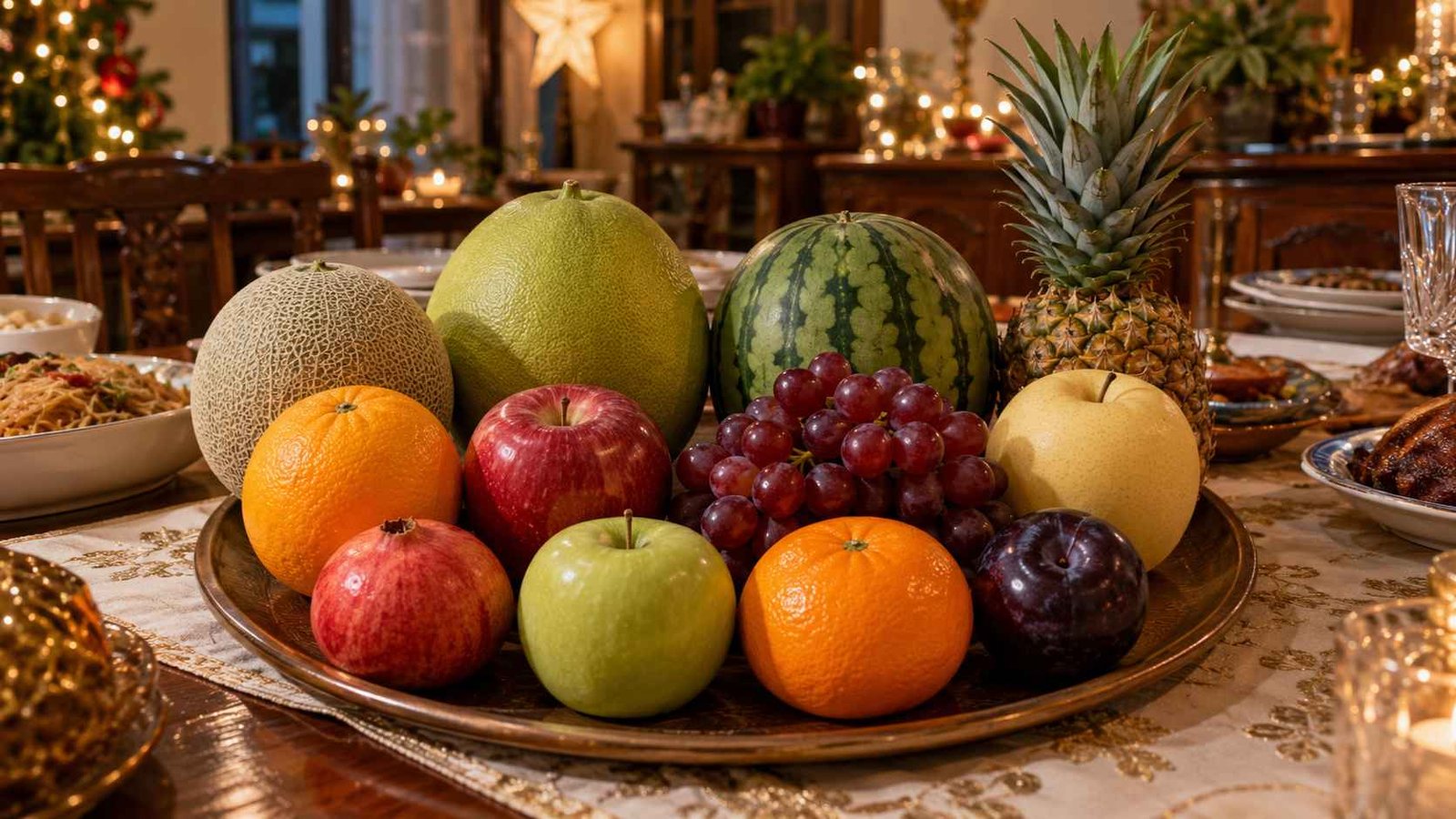
Grapes, oranges, apples and melons piled high for Media Noche. Here is how a Chinese symbol of wealth and a Spanish midnight custom came together into one of the most colorful Filipino traditions, plus a 12-question quiz to fill your own lucky basket.
Key Takeaways
- Filipino families display twelve kinds of round fruits during Media Noche, the midnight feast on New Year's Eve.
- The round shape represents coins and prosperity, while the number twelve stands for the twelve months of the year.
- The custom blends Chinese beliefs about round, golden objects with Spain's tradition of eating twelve grapes at midnight.
- It is a cultural belief and a family tradition, not a guarantee of fortune, and that is exactly what makes it fun.
Part 1
What Is the 12 Round Fruits Tradition?
In the last days of December, fruit stalls in Philippine markets suddenly fill with pyramids of grapes, oranges, apples and pomelos. Shoppers walk away with bags of fruit in every color, carefully counting the kinds they have bought. They are preparing for one of the country's best-known New Year customs.
On New Year's Eve, many Filipino families hold Media Noche, a Spanish term meaning "midnight." It is a feast shared as the clock strikes twelve. At the center of the table, or in a basket nearby, sits a collection of twelve different round fruits. The belief is simple: welcoming the new year with these fruits invites prosperity and good luck for all twelve months ahead.
Most families aim for twelve kinds of fruit rather than twelve pieces. Some eat them at midnight, while others keep them on display through New Year's Day before sharing them with relatives and guests.
Part 2
Why Round? Why Twelve?
Both parts of the tradition carry their own meaning, and together they form a hopeful wish for the year ahead.
●
Round like coins
Round fruits resemble coins, so they have long been associated with money and abundance. Golden or orange fruits are especially popular because their color also suggests wealth.
12
One for every month
Twelve fruits stand for the twelve months of the coming year. Each one is a small wish that the family will enjoy prosperity from January all the way to December.
Good to know: Like many New Year customs around the world, the twelve fruits are a symbolic tradition. They are a way to express hope and gather the family, not a proven way to change your luck.
Part 3
Where the Tradition Came From
There is no single written record that marks the "invention" of the twelve round fruits. Instead, historians and cultural writers generally point to a mix of influences that met in the Philippines over centuries.
Chinese influence
Round, golden symbols of prosperity
Chinese traders were visiting and settling in the Philippine islands long before the Spanish arrived. Binondo in Manila, founded in 1594, is widely considered the oldest Chinatown in the world. Through these communities, many Chinese beliefs about luck became part of everyday Filipino life.
In Chinese tradition, round objects are associated with wholeness and wealth. During Chinese New Year, mandarin oranges are given as gifts because their golden color and their Cantonese name are linked with gold and good fortune. These ideas closely match the Filipino focus on round, coin-like fruits.
Spanish influence
Twelve grapes at midnight
In Spain, people welcome the New Year by eating twelve grapes, one with each chime of the clock at midnight. The custom is known as las doce uvas de la suerte, or "the twelve grapes of luck." Crowds famously gather at Madrid's Puerta del Sol to eat their grapes as the clock tower rings.
Popular accounts trace the Spanish grape custom to the late 1800s and early 1900s, including stories of a large grape harvest in 1909. After more than three centuries of Spanish rule, the idea of twelve items for twelve months found a natural home in the Philippines.
The Filipino blend
A uniquely Pinoy Media Noche
Filipino families combined these influences into something of their own. The Spanish gave the twelve and the midnight feast, while Chinese beliefs gave the round, golden symbolism. The result is a table with twelve kinds of round fruits instead of twelve grapes.
Lifestyle shows, newspapers and annual feng shui forecasts have helped keep the custom popular in recent decades, and today it is practiced by families across the country and by Filipinos abroad.
Part 4
12 Popular Fruits and Their Meanings
There is no official list, so every household builds its own set. These twelve are among the most common choices in Philippine markets. The meanings below are folk associations shared by many families, not fixed rules.
🍇
Grapes
Ubas
A nod to Spain's twelve grapes. Their many small, round berries suggest abundance.
🍊
Oranges
Dalandan / Kahel
Their golden color makes them a favorite symbol of wealth.
🍎
Apples
Mansanas
Bright red and widely available, apples are a staple in most fruit baskets.
🟢
Pomelo
Suha
The largest citrus fruit. In Chinese tradition, it is linked with abundance and family unity.
🍈
Melon
Melon
Its sweet flesh is often associated with a sweet and pleasant year.
🍉
Watermelon
Pakwan
A big, round centerpiece that is easy to share with a large family.
🟤
Chico
Sapodilla
A familiar local fruit that adds a homegrown touch to the table.
🟡
Longan
"Dragon eye"
Small and round, longan is popular in Chinese-Filipino celebrations.
🍐
Asian Pear
Peras
Its round shape suits the tradition, though some families avoid splitting a pear because the Chinese word sounds like "separation."
🥝
Kiwi
Kiwi
A small, round fruit that adds a modern twist to the classic basket.
🟣
Plums
Plum
Their deep color and round shape make them an easy addition.
🍊
Kiat-kiat
Mini mandarin
Small, sweet mandarins that are especially popular during the holidays.
Did you know? Some families avoid fruits with spiky or thorny skin on the New Year's table, believing they bring obstacles. Others happily include them. Traditions vary from home to home.
Part 5
Other Media Noche Customs
The twelve fruits rarely appear alone. They are usually part of a whole set of New Year's Eve customs that many Filipino families follow together.
🔴
Polka dots. Many people wear polka-dot clothes, since the round dots echo the coin symbolism of the fruits.
🦘
Jumping at midnight. Children jump as the clock strikes twelve, a playful belief that it will help them grow taller.
🪙
Coins in pockets. Some people jingle coins in their pockets or scatter them around the house to welcome wealth.
📯
Noise to drive away bad luck. Torotot horns, pots, pans and car horns fill the streets, a custom often linked to Chinese beliefs that loud noise drives away misfortune.
🍡
Sticky rice treats. Tikoy, biko and other sticky delicacies are served in the hope that good fortune will "stick" to the family.
🍜
Noodles for long life. Pancit is a common Media Noche dish, as long noodles symbolize a long life.
🍗
Skipping chicken and fish. Some families avoid them because these animals scratch or search for food, which is linked to a "hand-to-mouth" year.
🚪
Open doors and windows. Opening the house at midnight is believed to let good luck flow in for the new year.
Part 6
How to Prepare Your Fruit Display
Whether you follow the tradition for luck or simply for fun, these practical tips will help you create a beautiful and sensible fruit display.
Shop a few days early
Fruit prices often rise in the last days of December. Buying a little ahead can help you stay within your budget.
Mix local and imported fruits
Local favorites like dalandan, chico and pomelo are often more affordable than imported apples or grapes, and they support Filipino farmers.
Choose twelve kinds, not twelve kilos
The tradition is about variety. One or two pieces of each fruit is enough for the display.
Wash before eating
Rinse fruits under clean running water before serving, especially grapes and anything eaten with the skin.
Share and avoid waste
After New Year's Day, share the fruits with family, neighbors or guests. Cutting them into a fruit salad is a popular way to make sure nothing goes to waste.
🧺 Quiz: Fill the Lucky Basket
Twelve questions, twelve fruits. Each correct answer adds a fruit to your Media Noche basket. Can you fill all twelve before midnight?
Frequently Asked Questions
Why do Filipinos prepare 12 round fruits for New Year?
The round shape represents coins and prosperity, and the number twelve represents the months of the year. Together, they express a wish for good fortune throughout the coming year.
Is the tradition Chinese or Spanish?
It is a blend of both. The symbolism of round, golden fruits reflects Chinese beliefs about wealth, while the idea of twelve items at midnight echoes Spain's custom of eating twelve grapes. Filipino families combined both into their own tradition.
Do the fruits need to be exactly round?
Most families choose fruits that are round or nearly round. There is no official rule, so households often adjust based on what is available and affordable.
Should I buy 12 pieces or 12 kinds of fruit?
The common practice is twelve different kinds of fruit. You only need one or a few pieces of each.
What is Media Noche?
Media Noche, Spanish for "midnight," is the feast Filipino families share on New Year's Eve as the clock strikes twelve. It is different from Noche Buena, the Christmas Eve feast.
Start Every Day With a Fresh Quiz
Enjoyed testing your knowledge? Try new questions on history, science, geography and current events, updated daily.
Play Today's Bing QuizNew Year customs vary by family, region and culture. This article describes common beliefs for educational purposes and does not promise any particular outcome.