How Daily Quizzes Help Your Brain Remember Facts Longer
Most people think learning means reading something again and again until it finally sticks. It sounds logical, right?
But the brain can be wonderfully stubborn. It does not always remember what you simply see. It often remembers better what you are forced to pull back out.
That is where daily quizzes become surprisingly powerful. A short quiz each day trains your brain to retrieve information, notice weak spots, and connect facts to real understanding. It is not just a game. It is a small memory workout disguised as trivia.
The Fresh Angle: Quizzes Are Memory Rehearsals, Not Just Tests
Many people treat quizzes like final exams. You answer the questions, get a score, and move on. But daily quizzes work best when you see them differently.
They are not only checking what you know. They are helping your brain practice remembering.
Think of it like this:
📖 Reading a fact is like seeing someone’s face once.
❓ Answering a quiz question is like trying to remember their name later.
That effort matters. Even when you get an answer wrong, your brain becomes more alert to the correct answer afterward. The mistake creates a small mental hook. Next time, the fact has somewhere to hang.
That is why quiz learning can be more effective than passive reading.
Why Daily Quizzes Help Memory Improvement
Memory is not one single skill. It is a process. Your brain has to notice information, store it, retrieve it, and connect it with what you already know. Daily quizzes support each part of that process.
🔎 1. They Make Your Brain Retrieve Information
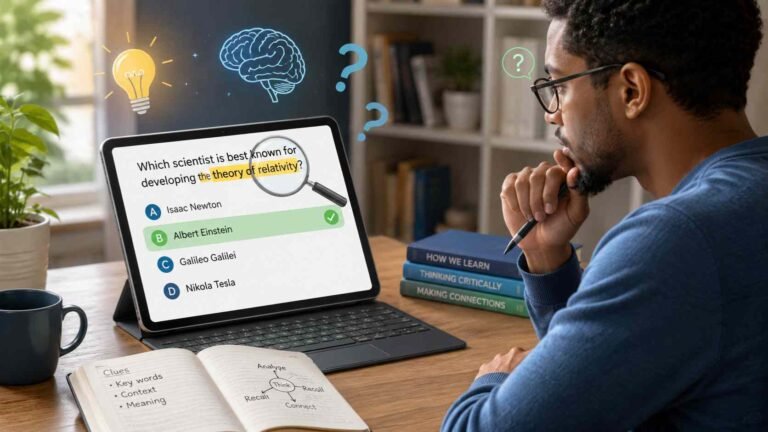
When you answer a quiz question, your brain has to search for the answer. That searching is the workout.
For example, if a question asks, “What is the capital of Canada?” you may pause and think, “Toronto? No, wait… Ottawa.” That small struggle strengthens the memory pathway.
💡 2. They Show What You Actually Know
Reading can trick you. A fact may look familiar, so you think, “Yes, I know that.” Then a quiz asks about it, and suddenly your brain goes blank.
Quizzes reveal the difference between recognition and real memory. Recognition says, “I have seen this before.” Memory says, “I can recall this when I need it.”
🧩 3. They Turn Mistakes Into Memory Clues
Getting a quiz question wrong can feel annoying, but it can also help. A wrong answer creates attention because your brain expected something else.
When the correction arrives, it often sticks better. That is why educational quizzes are useful for general knowledge: they do not just add new facts; they also clean up wrong ones.
Why Doing Quizzes Daily Works Better Than Once in a While
A long quiz once a month can be fun, but it may not help memory as much as short, repeated practice. Daily quizzes work because they create a learning rhythm.
⏱ Small Practice Beats One Big Study Session
Your brain usually remembers better when learning is spaced out. Five minutes today, five minutes tomorrow, and five minutes the next day can be more useful than one huge study session that melts your brain like cheese on hot bread.
Daily quizzes make this easy because they are short, repeatable, and simple to start.
🔁 Repetition Feels Less Boring When It Comes as Questions
Repeating facts can feel dull. But quizzes make repetition more active.
Instead of reading, “Mercury is the closest planet to the Sun,” you answer, “Which planet is closest to the Sun?” That tiny change makes the brain work harder, and that effort makes the fact more memorable.
How Daily Quizzes Build General Knowledge
General knowledge grows through small connections. One question about history may connect to geography. A science question may connect to daily life. A literature question may lead you to a new author, country, or time period.
That is the quiet power of online quizzes. They expose you to many topics in a low-pressure way.
You may not become an expert overnight, but you start collecting mental puzzle pieces. Over time, those pieces connect.
🌟 Curiosity Makes Facts Stickier
Facts are easier to remember when they make you curious. A quiz might ask, “Which animal can sleep while standing up?” You answer it, then wonder, “Wait, how does that even work?”
Now you are interested. And when curiosity wakes up, memory usually follows.
The Role of Answer Explanations
A quiz without explanations is only half useful. The score tells you what happened. The explanation tells you why.
📌 Explanations Turn Answers Into Understanding
Suppose you answer, “Which ocean is the largest?” and choose the Atlantic. The correct answer is the Pacific.
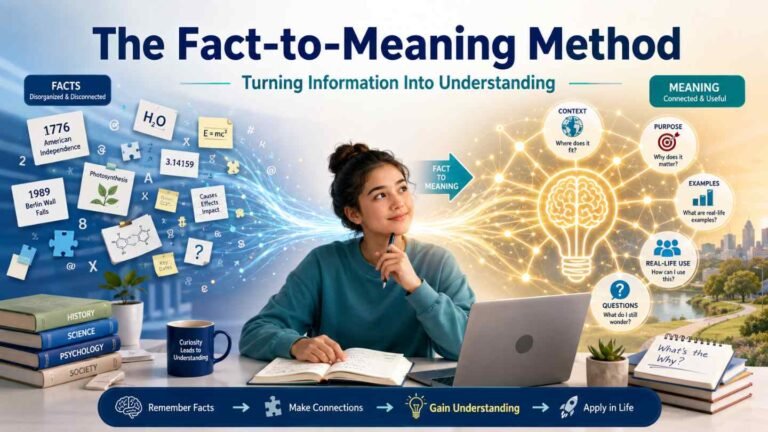
A simple correction helps, but an explanation helps more: the Pacific Ocean is the largest and deepest ocean on Earth. Now the fact has context, and your brain has more details to connect with the answer.
🧭 Good Explanations Fix Confusion
Sometimes wrong answers are not random. They come from confusion. Maybe you mix up Arctic and Antarctic. Maybe you confuse Austria with Australia. Maybe your brain sees “photosynthesis” and immediately runs away.
Answer explanations slow things down and help you understand the difference between similar ideas. That is where real quiz learning happens.
Daily Quizzes and Brain Training: What They Can and Cannot Do
Let’s be balanced. Daily quizzes are helpful, but they are not magic brain vitamins.
They can improve recall, support focus, grow general knowledge, and make learning feel less boring. But they will not instantly turn you into a walking encyclopedia, and that is perfectly fine.
The goal is not to know everything. The goal is to remember more than you did yesterday.
✅ What Daily Quizzes Can Help With
- Improve fact recall
- Build stronger memory habits
- Learn new general knowledge
- Notice weak areas
- Stay mentally active
- Practice short bursts of focus
- Make learning more enjoyable
⚠️ What Daily Quizzes Cannot Replace
They should not replace deep reading, hands-on practice, or serious study when those are needed.
A quiz can help you remember a science fact, but if you want to truly understand biology, history, finance, or language, you still need deeper learning.
Daily quizzes are best used as a doorway. They open interest. Then you can walk further.
Practical Tips for Getting More From Daily Quizzes
Doing quizzes is good. Doing them wisely is even better.
1. Read the Explanation, Even When You Are Right
Do not rush away after a correct answer. The explanation may give you an extra detail that makes the fact easier to remember.
2. Keep a “Missed Questions” List
Write down the questions you got wrong, especially the ones that made you say, “Oh, I should remember that.” Review them once or twice a week.
3. Say the Correct Answer Out Loud
It may feel silly, but it helps. Saying the answer gives your brain another way to process it. Bonus points if you say it like a game show host.
4. Connect New Facts to Something You Already Know
Memory likes connections. If you learn a fact about the Nile River, connect it to Egypt, ancient history, or maps you have seen.
5. Do Short Quizzes Consistently
You do not need a huge quiz every day. A 5-question or 10-question quiz can be enough. Consistency matters more than cramming.
A Simple Daily Quiz Routine
Here is an easy routine you can follow if you want to use quizzes for better memory and general knowledge.
Step 1
Take a short mixed-topic quiz.
Step 2
Check what you got right and wrong.
Step 3
Read the explanations carefully.
Step 4
Save one interesting fact for the day.
Step 5
Review missed questions weekly.
Why Online Quizzes Make Learning Easier
Online quizzes are popular because they remove friction. You do not have to plan a full study session. You do not need a textbook. You can answer a few questions during a coffee break, lunch break, or while waiting for something to load.
They are quick, accessible, and often fun. For busy people, that matters.
A daily quiz gives your brain a small challenge without making learning feel like homework. And when learning feels easy to start, you are more likely to keep doing it.
FAQs About Daily Quizzes and Memory
1. Do daily quizzes really improve memory?
Yes. Daily quizzes can support memory improvement because they make your brain practice recall. Instead of only reading facts, you actively retrieve answers, which helps strengthen memory over time.
2. How many quiz questions should I answer each day?
A short quiz with 5 to 10 questions is a good start. The goal is consistency, not exhaustion. A few focused questions every day can be more useful than a long quiz once in a while.
3. Are educational quizzes better than random trivia?
Both can help, but educational quizzes with answer explanations are usually more useful for learning. Random trivia can spark curiosity, while explanations help turn facts into understanding.
4. What should I do when I get a quiz answer wrong?
Read the explanation, write down the correct answer if it matters to you, and review it later. Wrong answers are not wasted. They show exactly where your memory needs more practice.
Final Thoughts
Daily quizzes help your brain remember facts longer because they make learning active.
They ask your brain to recall, compare, correct, and connect information. That is much stronger than simply rereading facts and hoping they stay.
The best part is that quiz learning does not have to feel heavy. A few questions a day can build memory, sharpen curiosity, and slowly grow your general knowledge.
You may forget a score. But a fact you struggled to remember, corrected, and understood? That one has a much better chance of sticking.