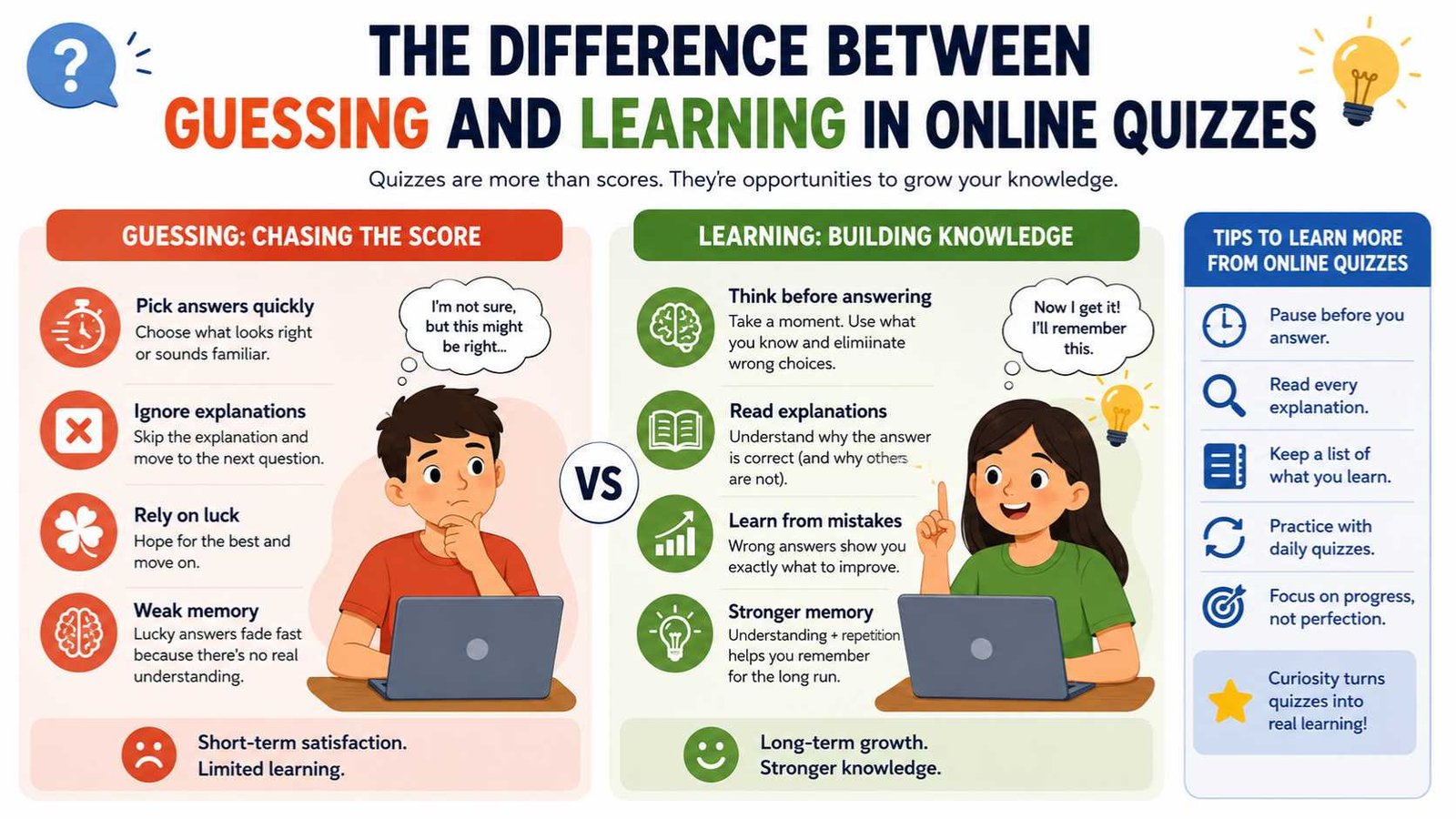
The Difference Between Guessing and Learning in Online Quizzes
Online quizzes are fun because they feel quick, light, and easy to start. You see a question, pick an answer, and get that tiny rush of either “I knew it!” or “Wait… how was that wrong?”
But here is the interesting part: not every quiz attempt teaches you something.
Sometimes you are learning.
Sometimes you are guessing.
And sometimes you are doing a mysterious third thing called “clicking whatever looks familiar and hoping your brain is secretly a genius.”
That is where the real difference begins.
The best online quizzes are not just about getting a high score. They can help you build general knowledge, improve memory, and notice what you actually understand. But only if you use them the right way.
🌟 The Fresh Angle: Your Wrong Answers Are Not Failures
Most people treat quiz scores like a final judgment.
Got 9 out of 10? Smart.
Got 4 out of 10? Bad day. Maybe blame the Wi-Fi.
But a quiz score is not the whole story. A wrong answer can be more useful than a lucky correct answer.
Why? Because a wrong answer shows you exactly where your brain took a wrong turn. That little mistake can reveal a gap in memory, a confusing detail, or a topic you have never really understood.
That is where quiz learning starts.
🎯 What Guessing Looks Like in Online Quizzes
Guessing is not always bad. Sometimes it is part of the process. But guessing becomes a problem when it replaces thinking.
Common signs you are only guessing
For example, let’s say a quiz asks:
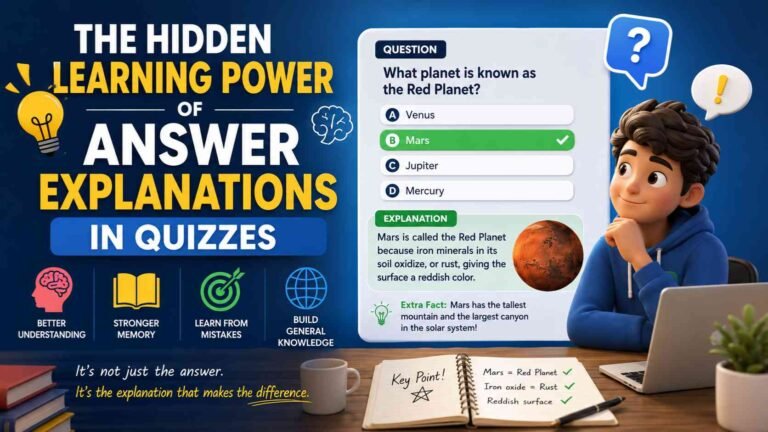
Question:
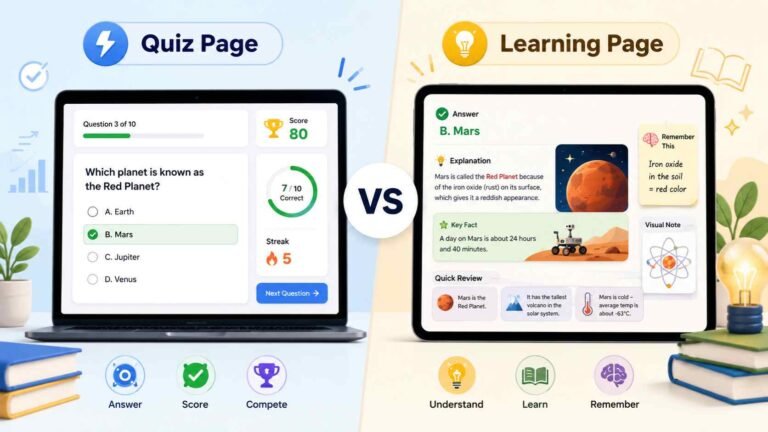
Which planet is known as the Red Planet?
You choose Mars because you remember hearing it somewhere. That is fine. But if the next question asks why Mars appears red and you have no idea, then your knowledge is still thin.
You got the fact right, but you have not fully learned the idea behind it.
📘 What Learning Looks Like in Online Quizzes
Learning happens when you slow down enough to understand the answer, not just select it.
A good quiz does more than test your memory. It gives your brain a reason to organize information.
Learning means you can explain the answer
If you answer a question correctly and can explain why it is correct, that is stronger learning.
If you answer incorrectly, read the explanation, and then understand your mistake, that is also learning.
Actually, that may be even better.
Question: What gas do plants absorb during photosynthesis?
Answer: Carbon dioxide.
If you only memorize “plants absorb carbon dioxide,” that is a start. But if the explanation helps you understand that plants use carbon dioxide, sunlight, and water to make food, the information becomes easier to remember.
Now you are not just collecting trivia. You are building connections.
⚡ Why Guessing Feels Easier Than Learning
Guessing is fast. Learning takes a little more effort.
That is why online quizzes can trick us. They feel productive because we are answering questions, but answering questions quickly is not always the same as understanding them.
Guessing
Gives you instant movement.
Learning
Gives you lasting value.
The funny thing is, your brain likes shortcuts. It loves familiar words, bold options, and answers that seem “obvious.” This is why multiple-choice quizzes can sometimes feel easier than they really are.
You may recognize the right answer without truly knowing the topic. That is not useless, but it is not deep learning yet.
💡 Why Answer Explanations Matter More Than the Score
Answer explanations are where the real teaching happens.
The score tells you what happened.
The explanation tells you why it happened.
A quiz without explanations is like a teacher saying, “Wrong,” and then walking away dramatically into the hallway. Not very helpful.
Good answer explanations help you:
✅ Understand why the correct answer is right
✅ See why the wrong choices are wrong
✅ Remember the fact more clearly next time
✅ Connect one topic to another
✅ Turn random trivia into real general knowledge
This is especially useful in educational quizzes, daily quizzes, and general knowledge quizzes where the goal is not just entertainment. The goal is to become a little sharper each time.
🧠 The Memory Difference: Lucky Answers Fade Faster
A lucky guess does not stick well.
You might get the answer right today and forget it tomorrow because your brain never built a strong connection to it.
Learning works differently. When you read an explanation, compare choices, and think about the reason behind the answer, your brain has more hooks to hold onto.
Example
If you guess that the Pacific Ocean is the largest ocean, you may remember it for a while.
But if the explanation tells you that the Pacific Ocean is larger than all the land on Earth combined, that detail gives your memory something stronger to grab.
That is how memory improvement often works. You remember better when information has meaning, context, or a surprising detail attached to it.
🌍 How Online Quizzes Can Build Real General Knowledge
Online quizzes are powerful because they expose you to many topics in a short time.
One daily quiz might include science, history, geography, sports, entertainment, and current events. That mix keeps your brain active and curious.
But the key is to treat each question like a small doorway, not a dead end.
Instead of thinking:
“I got that wrong. Next.”
Try thinking:
“Why did I think the wrong answer was right?”
That one question changes everything. It turns a simple quiz into a learning tool.
🟡 Guessing Is Not Always Bad
Let’s be fair to guessing. Guessing has its place.
In fact, guessing can help when you use it as part of active thinking.
Good guessing sounds like this:
“I do not know for sure, but I can remove two wrong answers.”
“That word looks familiar, but I need to check the explanation.”
“I think it is this answer because of what I learned yesterday.”
Bad guessing sounds like this:
“I have no idea. This option looks fancy.”
That one is less educational, though sometimes very emotionally honest.
🚀 How to Turn Guessing Into Learning
You do not need a complicated system. Just change how you take quizzes.
1. Pause before answering
Before clicking, ask yourself: “Do I actually know this, or does it just look familiar?” That tiny pause helps separate memory from guesswork.
2. Eliminate wrong answers first
Even if you do not know the answer, try removing options that seem clearly wrong. This improves reasoning and makes the quiz more useful.
3. Read every explanation
Yes, even when you got the answer right. Sometimes you get the correct answer for the wrong reason. The explanation helps clean that up.
4. Keep a “missed questions” list
Write down questions you got wrong or guessed on. You do not need a fancy notebook. A simple note on your phone works.
Photosynthesis uses carbon dioxide
Mount Everest is in the Himalayas
5. Retake similar quizzes
Daily quizzes are helpful because they create repetition. When similar topics appear again, your brain gets another chance to remember.
6. Explain one answer out loud
After a quiz, choose one question and explain the answer in your own words. If you can explain it simply, you probably understand it.
⏱️ The Best Way to Use Daily Quizzes
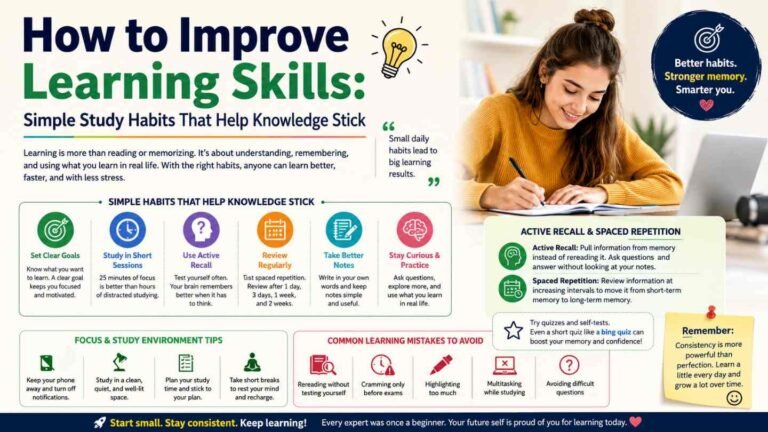
Daily quizzes work best when they become a small habit.
You do not need one hour. You do not need a giant study plan. You just need a few focused minutes.
A simple 5-minute quiz routine
- Take one short quiz.
- Mark the questions you guessed.
- Read the answer explanations.
- Write down one new thing you learned.
- Try to remember it later in the day.
Small, repeated learning beats one long study session that ends with you staring at the ceiling wondering why ancient history has so many names.
✨ Why Curiosity Matters
Curiosity is the bridge between guessing and learning.
A person who only wants the score stops when the quiz ends. A curious person keeps going for a few more seconds.
They ask:
“Why is that true?”
“How did I miss that?”
“What else is connected to this?”
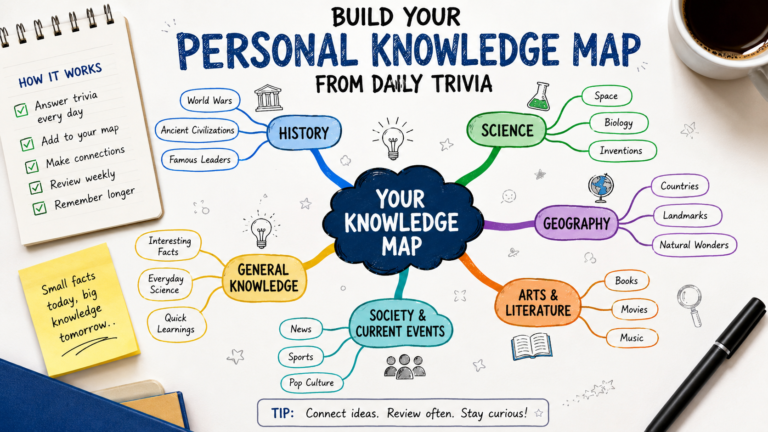
That curiosity turns online quizzes into something more valuable than entertainment. It makes them a simple way to explore the world.
One question about the moon can lead to astronomy. One question about a famous painting can lead to history. One question about a country can lead to geography, culture, food, and suddenly you are reading about flags at midnight.
It happens. No judgment.
🔍 Guessing vs Learning: The Main Difference
Here is the simplest way to understand it:
Guessing
Choosing an answer.
Learning
Understanding the answer.
Guessing ends when you click. Learning starts after you click.
That does not mean every quiz needs to feel like homework. Online quizzes can still be fun, fast, and light. But when you add explanations, reflection, and repetition, they become much more useful.
✅ Practical Tips for Better Quiz Learning
Use these habits during online quizzes:
✅ Slow down on questions that feel familiar
✅ Notice which topics you keep missing
✅ Read answer explanations before moving on
✅ Review wrong answers later
✅ Take daily quizzes for steady practice
✅ Mix easy and hard quizzes
✅ Focus on learning one new thing each day
You do not need to master everything at once. Just collect small pieces of knowledge and connect them over time. That is how general knowledge grows.
❓ FAQs About Guessing and Learning in Online Quizzes
1. Is guessing bad in online quizzes?
No, guessing is not always bad. It becomes a problem only when you guess randomly and ignore the explanation. Educated guessing can actually help you practice reasoning.
2. Can online quizzes really improve memory?
Yes, online quizzes can support memory improvement when you review the answers, read explanations, and repeat similar topics over time. The key is active recall, not just clicking quickly.
3. Why are answer explanations important?
Answer explanations help you understand why an answer is correct. They also show why the other choices are wrong, which makes the information easier to remember.
4. How can I learn more from daily quizzes?
Take your time, mark the questions you guessed, read the explanations, and write down one thing you learned. A few minutes of focused quiz learning each day can build strong general knowledge over time.
🌈 Final Thoughts
Online quizzes can be more than a quick score. They can become a simple, enjoyable way to learn something new every day.
The difference between guessing and learning is not whether you get the answer right. It is whether you understand the answer after the quiz.
So the next time you take a quiz, do not rush past the wrong answers. Those little mistakes may be the most useful part. Read the explanations, notice your patterns, and let your curiosity do some work.
A lucky guess feels good for a moment.
Real learning stays with you longer.