Knowledge Is Power: Why Learning Still Matters Today
Knowledge has never been easier to reach. A phone can retrieve definitions, tutorials, news reports, research papers, and expert commentary in seconds. Yet easy access has created a new challenge: finding information is no longer the hardest part. The harder task is deciding what deserves trust, understanding what it means, and using it responsibly.
That is why the familiar idea that “knowledge is power” still matters. The phrase is not simply a celebration of intelligence or academic achievement. At its best, it describes a practical kind of power—the ability to understand a situation, weigh evidence, recognize consequences, and choose a thoughtful course of action.
Knowledge does not make anyone all-knowing, and it does not guarantee success. What it can provide is a stronger starting point. It gives people language for their questions, context for their choices, and a better chance of responding to change with judgment rather than guesswork.
A fact stored in memory has limited value by itself. Its value grows when it helps someone solve a problem, avoid a mistake, understand another person, or make a better decision.
What “Knowledge Is Power” Really Means
In everyday life, power is often associated with authority, wealth, or influence. Knowledge creates a different form of power. It increases personal agency—the capacity to participate in decisions instead of merely reacting to them.
Someone who understands a contract can ask more precise questions before signing it. A person who knows the basics of budgeting can compare costs and plan ahead. A voter who checks evidence and understands historical context is less dependent on slogans. A patient with stronger health literacy may be better prepared to discuss options with a qualified healthcare professional.
In each case, knowledge does not replace expertise or eliminate uncertainty. It allows a person to engage more intelligently with the situation. That is an important distinction: being informed is not the same as believing you can never be wrong. Genuine learning should make people more capable, but it should also make them more aware of what they do not yet know.
Clarity
Background knowledge helps separate the central issue from distracting details.
Judgment
Understanding evidence, risk, and context improves the quality of comparison.
Independence
Informed people are better equipped to question unsupported claims and pressure.
Action
Knowing possible next steps makes it easier to move from concern to a practical response.
Information Is Abundant, but Understanding Is Earned
The internet has made information plentiful, but abundance is not the same as accuracy. Search engines and digital platforms can surface useful material, outdated material, advertising, satire, opinion, manipulated media, and outright falsehoods—sometimes on the same screen.
Information
Individual facts, claims, figures, images, instructions, and opinions that are available to receive.
Knowledge
Information that has been examined, connected to context, understood, and retained well enough to be used.
Learning deeply involves more than collecting links. It requires asking where a claim came from, whether the evidence is current, what important details might be missing, and whether other credible sources reach the same conclusion. It also requires enough subject knowledge to notice when a statement is oversimplified or internally inconsistent.
Artificial intelligence makes this skill even more valuable. AI tools can summarize, explain, translate, and generate ideas quickly, but their answers still need human evaluation. A confident-sounding response can contain an error. People who understand the subject are in a better position to verify the output, challenge weak reasoning, and use the tool productively.
Learning Strengthens Better Decision-Making
Every decision combines facts, values, experience, and uncertainty. Knowledge cannot remove all risk, but it can improve the quality of the questions being asked.
Financial knowledge, for example, can help a person understand interest, fees, inflation, diversification, and the difference between a promise and a guarantee. Health knowledge can help someone recognize when general advice is not a substitute for professional care. Historical knowledge can reveal how present-day institutions and conflicts developed. Communication knowledge can help people listen more carefully, express boundaries, and identify misunderstandings before they grow.
The strongest learners do not merely ask, “What do I want to believe?” They ask, “What evidence would change my mind?” That habit is powerful because it reduces the temptation to search only for material that confirms an existing opinion.
Knowledge Builds Confidence—When Paired With Humility
Preparation often reduces unnecessary fear. A student who understands the material approaches an examination differently from one relying on luck. A worker who has practiced a new system is more comfortable using it. A person who has researched an important conversation can explain concerns more clearly.
This kind of confidence is not loud or performative. It comes from having a reasonable basis for action. It also remains open to correction. In fact, one sign of mature knowledge is the ability to say, “I do not know yet, but I know how to investigate it.”
Overconfidence can be as dangerous as ignorance. Knowing a small amount about a complicated subject may create the illusion of mastery. Responsible learners check the limits of their understanding, consult qualified specialists when necessary, and distinguish personal experience from reliable evidence.
Reality: Knowledgeable people are often better at recognizing when a question requires more evidence, more time, or a different expert.
Lifelong Learning Makes Adaptation Easier
Education does not end when formal schooling ends. Technology changes job roles, new research updates professional practice, and social conditions create problems that previous generations did not face in the same way. UNESCO describes lifelong learning as necessary in a world being reshaped by technological, economic, environmental, and demographic change. The OECD likewise emphasizes adult learning as a way to develop and maintain relevant skills throughout working life.
Adaptability is not simply the ability to tolerate change. It is the ability to learn what a new situation requires. That might mean mastering unfamiliar software, improving data literacy, learning to supervise a distributed team, understanding new regulations, or developing a skill outside one’s original field.
People who keep learning are not guaranteed an easy transition, but they have more tools available when circumstances shift. They can compare the new situation with previous knowledge, identify gaps, and build a plan instead of treating change as an entirely mysterious threat.
Learning Expands Opportunity
Knowledge can create possibilities that were previously invisible. A new language can open access to people and ideas. Technical training can qualify someone for a different role. Understanding a customer problem can inspire a useful service. Learning how a process works can reveal where it wastes time, money, or effort.
Opportunity, however, is not produced by knowledge alone. Access, health, time, financial resources, supportive institutions, and social conditions also matter. It would be misleading to suggest that every obstacle can be solved through personal effort. Still, learning can increase the range of actions a person is prepared to take when an opening appears.
Education therefore has both personal and public value. It can support employment and entrepreneurship, but it also helps people participate in communities, understand civic issues, and communicate across differences.
Curiosity Is the Engine of Real Learning
Curiosity begins where certainty ends. It turns an unfamiliar word, unexpected result, or conflicting claim into an invitation to investigate. Rather than treating a question as evidence of weakness, curious people treat it as the starting point of understanding.
This matters in a culture built around rapid reactions. Curiosity slows the impulse to judge before examining. It asks how a conclusion was reached, what assumptions support it, and what another perspective might reveal. That pause can lead to better conversations as well as better research.
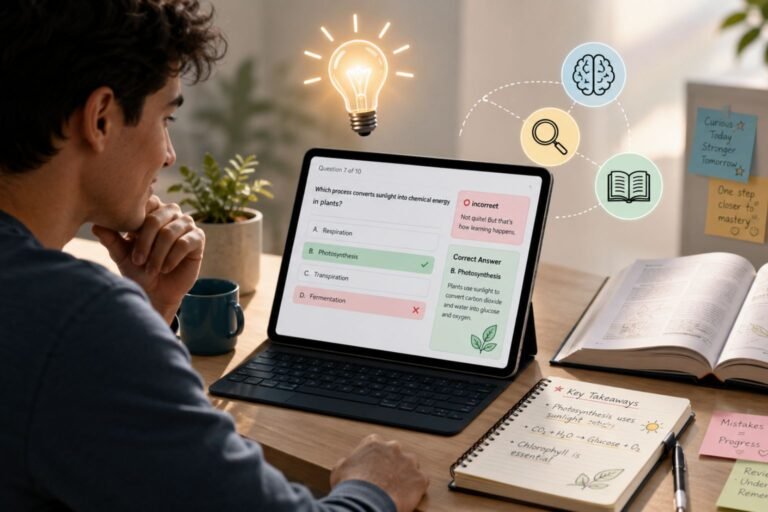
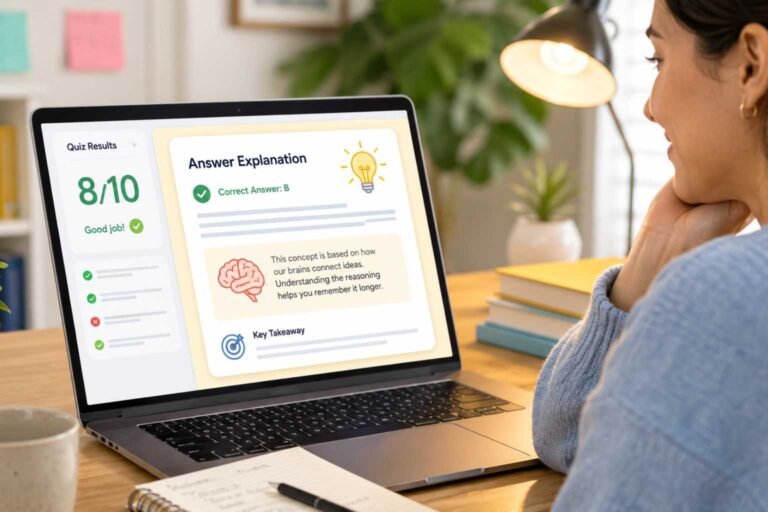
Learning does not always need to feel formal. Books, documentaries, museums, conversations, workplace projects, courses, experiments, and travel can all teach. Even a well-designed Bing Quiz Today can expose a gap in knowledge, revive a forgotten fact, or lead someone toward a subject worth exploring more deeply.
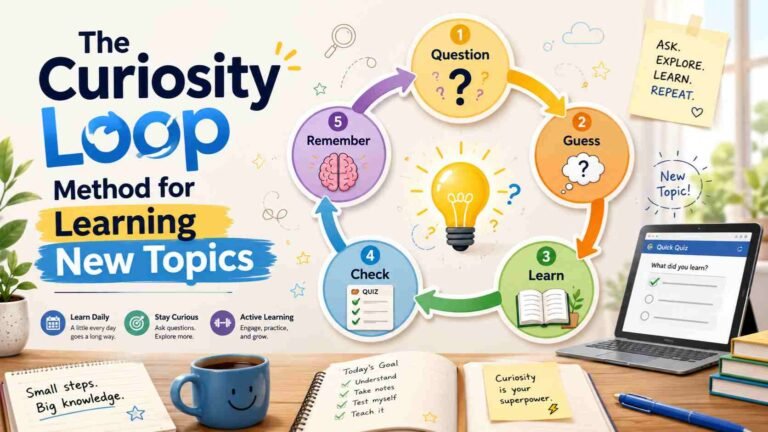
The quiz itself is only a beginning. The real learning happens when a surprising answer leads to another question: Why is that true? How was it discovered? Does the same principle apply elsewhere?
Learning and Brain Health: A Careful Perspective
Mentally engaging activities can be enjoyable and may contribute to a more active intellectual life. Research has examined associations between cognitive activity, cognitive reserve, and healthy aging. However, it is important not to turn that evidence into a miracle claim.
No single puzzle, course, app, or trivia habit can guarantee protection from cognitive decline or dementia. The U.S. National Institute on Aging notes that evidence for commercially available brain-training products is not strong enough to assume they produce the same effects seen in controlled clinical research. Brain health is influenced by many factors, including physical health, sleep, activity, social connection, genetics, and access to care.
The responsible conclusion is simple: learning can be a meaningful part of an engaged life, but it should not be marketed as a cure or a guaranteed medical intervention.
How to Turn Information Into Lasting Knowledge
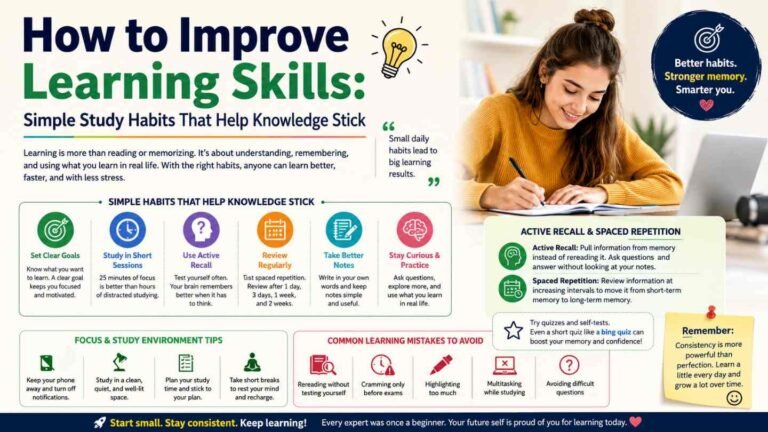
Reading more is useful, but effective learning depends on what happens after information is encountered. The following habits make learning more deliberate and practical:
- Begin with a precise question. “How does compound interest work?” is easier to investigate than “Teach me everything about money.”
- Use credible sources first. For high-stakes subjects, prioritize official agencies, primary research, professional guidance, and recognized institutions.
- Compare, do not merely collect. Look for agreement, disagreement, publication dates, definitions, and differences in evidence.
- Explain the idea in your own words. If you cannot explain it clearly without copying, your understanding may still be incomplete.
- Apply it soon. Solve a problem, discuss the concept, create an example, or use the skill in a real task.
- Review after a delay. Returning to material over time is more useful than assuming one exposure created permanent understanding.
- Update your conclusions. Good learners revise their views when stronger evidence appears.
What Knowledge Cannot Do
Celebrating knowledge should not lead to unrealistic claims. Knowledge cannot remove every barrier, predict every outcome, or make ethical decisions automatically. Two people can understand the same facts and still disagree because they assign different values, risks, or priorities to them.
Knowledge also needs character. Technical skill without responsibility can be misused. Persuasive ability without honesty can manipulate. Data without empathy can hide the human consequences of a decision. Wisdom requires asking not only, “Can this be done?” but also, “Should it be done, who could be affected, and what responsibilities follow?”
That is why the highest form of learning is not simply knowing more. It is learning to use what you know with accuracy, humility, and care.
Frequently Asked Questions
Is memorizing facts still useful?
Yes, when the facts provide a foundation for thinking. Memory allows people to make connections without searching for every basic detail. However, memorization is most valuable when combined with comprehension, context, and application.
Why learn something when AI can explain it?
AI can assist with explanation, but users still need enough knowledge to judge accuracy, notice omissions, ask better follow-up questions, and decide whether the output is suitable for the situation.
Does learning always require a formal course?
No. Formal education is valuable, but learning also happens through guided practice, reading, mentoring, observation, discussion, projects, and carefully chosen digital resources.
What is the best subject to learn?
The best starting point is usually a subject connected to a real question, responsibility, goal, or curiosity. Relevance makes it easier to stay engaged and apply the result.
Final Thoughts
Knowledge remains powerful because it changes how people see choices. It can sharpen judgment, strengthen communication, support adaptation, reveal opportunity, and make a person less vulnerable to careless claims.
But its deepest value is not the number of facts a person can recite. It is the capacity to keep asking, checking, connecting, reconsidering, and growing.
Read widely. Verify carefully. Stay curious. Use what you learn well.