How Planet Earth Quizzes Help You Understand Weather, Oceans, and Nature
Planet Earth is not just a place we live on. It is a moving, breathing, changing system filled with patterns, surprises, and powerful natural forces.
The weather shifts. Oceans move heat around the globe. Forests support animals, insects, soil, and air. Volcanoes, storms, earthquakes, tides, and seasons all follow rhythms that shape life every day.
That sounds like a lot to remember, but this is where Planet Earth quizzes make learning feel lighter, clearer, and much more enjoyable.
A good quiz does not just test what you know. It helps you notice connections. A short weather quiz might explain why clouds form. An ocean quiz might show why tides rise and fall. A nature quiz might reveal how one small change in an ecosystem can affect many living things.
Instead of memorizing long lessons, you learn one clear idea at a time. That is what makes Planet Earth quizzes so useful for students, families, trivia fans, and curious learners of all ages.
🌍 Why Earth Science Feels Easier Through Quizzes
Earth science can feel huge because it covers many topics: weather, oceans, rocks, animals, plants, climate, natural disasters, and ecosystems. A textbook chapter can feel like climbing a mountain. A quiz question feels like taking one clear step.
Quizzes break big subjects into smaller pieces. For example, one question might ask:
Question:
What causes wind?
The explanation might tell you that wind happens because air moves from areas of high pressure to areas of low pressure.
That one idea suddenly explains many things: why breezes feel stronger near the sea, why storms can bring strong winds, why weather maps show pressure systems, and why air is always moving around Earth.
The learning trick is simple:
One quiz question becomes a mental hook. Once the idea sticks, it becomes easier to connect it with real things you see outside.
☁️ Weather Quizzes Help You Read the Sky Better
Weather affects daily life more than most people realize. It influences what we wear, how we travel, when farmers plant crops, and whether outdoor plans go smoothly. A weather quiz can help you understand common weather ideas without making them feel complicated.
What You Can Learn From Weather Quizzes
These are not just school facts. They help you understand what you see outside. When you know that dark clouds often form when warm, moist air rises and cools, the sky starts to make more sense. When you learn that lightning is caused by electrical charges in clouds, thunderstorms become less mysterious.
You do not need to become a meteorologist. You only need enough knowledge to recognize the patterns around you.
🌊 Ocean Quizzes Reveal the Hidden Engine of the Planet
The ocean is one of the most important parts of Earth, but much of its work happens quietly. It absorbs heat, shapes weather, supports marine life, influences rainfall, fuels storms, and affects the air we breathe.
An ocean quiz can make these hidden processes easier to understand.
Simple Ocean Topics Quizzes Can Teach
- Why tides rise and fall
- How ocean currents move heat
- Why coral reefs matter
- What causes waves
- Why some parts of the ocean are colder
- How the ocean affects storms and rainfall
For example, a quiz question about tides can lead to a simple explanation: tides are mainly caused by the Moon’s gravity pulling on Earth’s oceans. That one fact connects the Moon, Earth, and ocean movement in a way that is easy to remember.
Another question might explain that warm ocean water can give energy to tropical storms. Suddenly, you understand why hurricanes and typhoons often form over warm seas. That is not random trivia. That is real-world Earth science.
🌿 Nature Quizzes Show How Living Things Are Connected
Nature is full of relationships. Bees pollinate flowers. Trees provide shelter. Fungi help break down dead material. Predators keep animal populations balanced. Soil, water, sunlight, and living creatures all work together.
A nature quiz helps you see those connections more clearly.
What Nature Quizzes Can Teach
A simple question like “Why are bees important?” can open the door to a bigger idea: many plants depend on pollinators to reproduce. That helps you understand why losing one small creature can affect flowers, fruits, animals, and people.
Nature quizzes turn random animal facts into bigger ecosystem lessons.
Instead of only learning isolated facts, you begin to see how life fits together.
🌋 Planet Earth Quizzes Help You Understand Natural Events
Natural events can seem sudden and frightening. Earthquakes, volcanic eruptions, floods, droughts, landslides, and storms can change lives quickly. Quizzes can help explain these events in plain language.
Example Question:
What causes earthquakes?
A simple explanation might say that earthquakes happen when energy is suddenly released along faults in Earth’s crust.
That answer helps you understand that earthquakes are not random punishments or strange accidents. They are part of how Earth’s crust moves. A volcano quiz might explain that volcanoes form where magma rises from beneath Earth’s surface. A flood quiz might show how heavy rain, overflowing rivers, poor drainage, or storm surge can lead to flooding.
The goal is not to make dangerous events seem small. The goal is to help people understand them better. Knowledge can make people more aware, prepared, and calm.
🧠 Why Quizzes Help Memory More Than Passive Reading
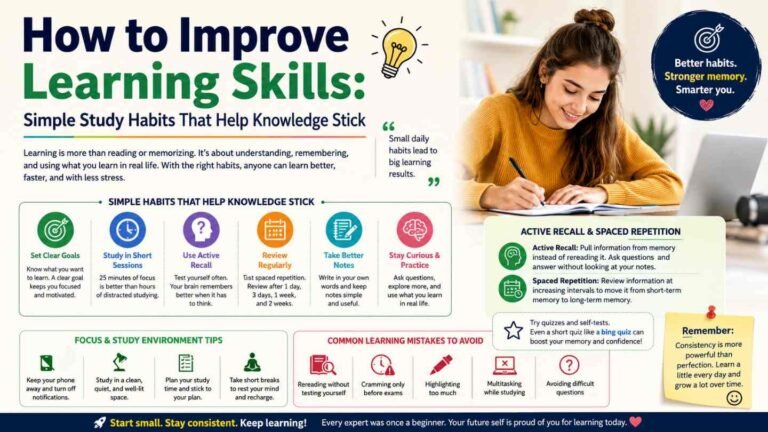
Reading an article can teach you something. But answering a question forces your brain to work harder. That is why educational quizzes are useful.
When you answer a quiz question, your brain has to:
- Recall what it knows
- Compare possible answers
- Notice mistakes
- Connect the explanation to the question
- Remember the idea for next time
This active process helps facts stick longer. You might forget a paragraph about the water cycle, but if a quiz asks, “What is evaporation?” and you get it wrong, the correction becomes easier to remember.
Mistakes are not failures in quiz learning. They are learning moments.
📚 Planet Earth Quizzes Build General Knowledge Naturally
General knowledge grows when you keep meeting useful facts in simple ways. Planet Earth quizzes are perfect for this because Earth science connects to everyday life.
You can learn why the sky changes color, why oceans look blue, why deserts are dry, why mountains affect weather, and why some animals only live in certain places. These small facts add up.
Over time, you become better at understanding:
- News about storms and climate
- Nature documentaries
- Science questions
- Geography facts
- Environmental issues
- Daily weather changes
You do not have to study for hours. A few good quiz questions each day can slowly build a stronger understanding of the world.
✅ Practical Tips for Learning About Earth Through Quizzes
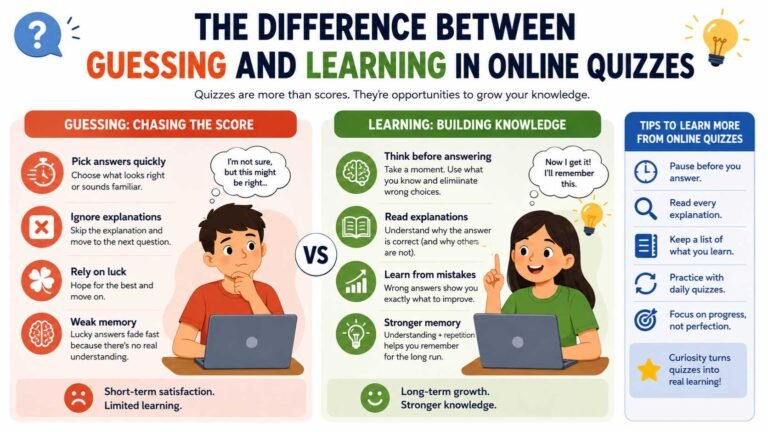
Planet Earth quizzes work best when you do more than chase a score. Here are simple ways to get more value from each quiz.
1. Read the Explanation
The answer tells you what is correct. The explanation tells you why. Do not skip it, even when you get the answer right.
2. Notice Patterns
Connect each answer to a bigger idea. Clouds connect to water vapor. Tides connect to the Moon. Storms connect to heat and air pressure.
3. Retake Quizzes Later
Retaking a quiz is not cheating. It is practice. Your brain has to recall the information again, which helps memory.
4. Mix Earth Topics
Try a weather quiz one day, an ocean quiz the next day, and a nature quiz after that to see how Earth’s systems connect.
5. Use Wrong Answers
A wrong answer can show what you misunderstood. Maybe you confused weather and climate, or waves and tides. That is useful.
📝 Examples of Planet Earth Quiz Topics
Here are some quiz ideas that can make Earth science more fun, beginner-friendly, and useful.
Weather Quiz Ideas
- What causes rain?
- Why does thunder happen after lightning?
- What is humidity?
- Why do storms form?
- What does air pressure mean?
Ocean Quiz Ideas
- What causes tides?
- Why is the ocean salty?
- What are coral reefs?
- How do currents affect weather?
- What lives in the deep ocean?
Nature Quiz Ideas
- What is a food chain?
- Why are bees important?
- What do decomposers do?
- Why do animals migrate?
- What is biodiversity?
Natural Event Quiz Ideas
- What causes earthquakes?
- Why do volcanoes erupt?
- What causes floods?
- How do landslides happen?
- Why do wildfires spread quickly?
👨👩👧 Why Planet Earth Quizzes Are Good for Kids and Adults
Planet Earth quizzes are not only for students. Kids can use them to learn basic science ideas. Adults can use them to refresh forgotten facts. Families can play them together. Teachers can use them as warm-up activities. Quiz websites can use them to make learning feel lighter and more enjoyable.
The best part is that Earth is already interesting. You do not need to invent excitement. The planet already has storms, deep oceans, glowing lightning, giant forests, strange animals, moving plates, and powerful natural forces.
Quizzes simply give people an easy way to explore Earth’s wonders one question at a time.
That is why Planet Earth quizzes work so well for daily learning, classroom review, family trivia, and online educational games.
❓ FAQs About Planet Earth Quizzes
What are Planet Earth quizzes?
Planet Earth quizzes are educational quizzes about weather, oceans, nature, ecosystems, natural events, and Earth science. They help learners understand how the planet works through short questions and simple explanations.
Can quizzes really help me learn Earth science?
Yes. Quizzes help because they make you recall information instead of only reading it. When you answer questions and review explanations, you are more likely to remember the lesson.
Are Planet Earth quizzes good for beginners?
Yes. They are great for beginners because they explain big topics in small steps. You can start with simple questions about clouds, oceans, animals, rain, or seasons before moving into harder Earth science topics.
What is the best way to use weather, ocean, and nature quizzes?
The best way is to answer the question, read the explanation, and connect it to something you have seen in real life. For example, after learning about humidity, notice how the air feels before rain.
Final Thoughts
Planet Earth quizzes make learning about the world feel simple, active, and enjoyable. They help you understand why weather changes, how oceans shape the planet, why ecosystems matter, and what causes natural events.
More importantly, they teach you to notice patterns. That is the real value.
When you understand the patterns of Earth, the world around you becomes less random. The sky, sea, forests, animals, and storms all begin to tell a clearer story.
A short quiz may look small, but one good question can change how you see the planet.