The Curiosity Compass: Finding Direction When Learning Feels Scattered
Some days, learning feels less like progress and more like standing in the middle of a room with every drawer open. You read one article, watch one video, answer a few quiz questions, save a helpful post, open another tab, and suddenly your mind is carrying ten half-connected ideas.
A history fact here. A science term there. A quote from a book. A question from class. A random headline you meant to understand better. Nothing is useless, exactly, but it can feel scattered.
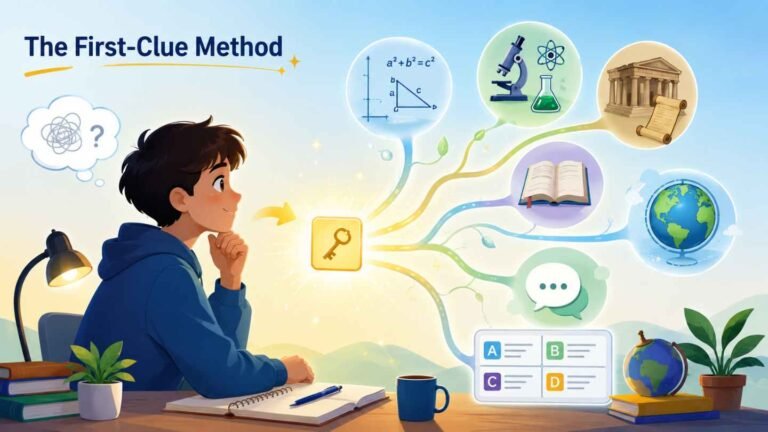
That is where the Curiosity Compass comes in. It is not a strict study system. It is a way of using your own questions to find direction. Instead of trying to learn everything at once, you let curiosity point to the next useful step.
What Is the Curiosity Compass?
The Curiosity Compass is the habit of asking, “What am I genuinely trying to understand here?” That one question can bring order to messy learning. When information feels overwhelming, curiosity helps you choose a direction. It gives your brain a reason to care. It turns random facts into clues, and those clues can lead to bigger ideas.
✨ The simple idea
A compass does not show the whole map. It simply points you somewhere. Curiosity works the same way. It does not answer everything immediately. It helps you decide what deserves your attention next.
Why Learning Feels Scattered
Learning often feels scattered because we collect information faster than we connect it. A student may memorize dates in history without understanding cause and effect. A reader may highlight half a chapter without knowing what the main idea is. Someone learning online may jump from grammar tips to productivity videos to science explainers without building a clear thread between them.
The problem is not always lack of effort. Sometimes, the problem is lack of direction. You may be gathering pieces, but you have not yet asked what picture those pieces belong to.
💡 Why it happens
Information becomes overwhelming when it stays in separate piles. Direction begins when one clear question tells those pieces where to go.
How Curiosity Helps You Choose What to Focus On
Curiosity gives learning a filter. Instead of asking, “What should I study?” ask what confused you, what surprised you, or what keeps appearing again. These questions help your mind choose one useful direction instead of chasing every possible idea at once.
❓ What confused me?
Confusion is not a failure. It is a signal. If you miss a quiz answer about the Roman Empire, do not only memorize the answer. Ask why Roman roads mattered. That question opens the door to trade, military power, communication, engineering, and government control.
⚡ What surprised me?
Surprise shows a gap between what you expected and what is true. If you learn that some deserts can be cold, ask what actually makes a desert a desert. Now you are not just memorizing geography. You are understanding climate.
🔁 What keeps appearing again?
Patterns are signs that an idea matters. If “supply and demand” appears in grocery prices, housing costs, sports tickets, and online shopping, your compass is saying, “Pay attention. This idea travels.”
Asking Better Questions When Everything Feels Disconnected
Not all questions guide learning equally well. A weak question stops quickly. A better question opens a trail. When your learning feels disconnected, upgrade the question.
Instead of asking, “What is this?”
Ask: “Why does this matter?” If you are studying photosynthesis, a definition is helpful, but asking why it matters connects science to food, oxygen, plants, climate, farming, and life on Earth.
Instead of asking, “What is the answer?”
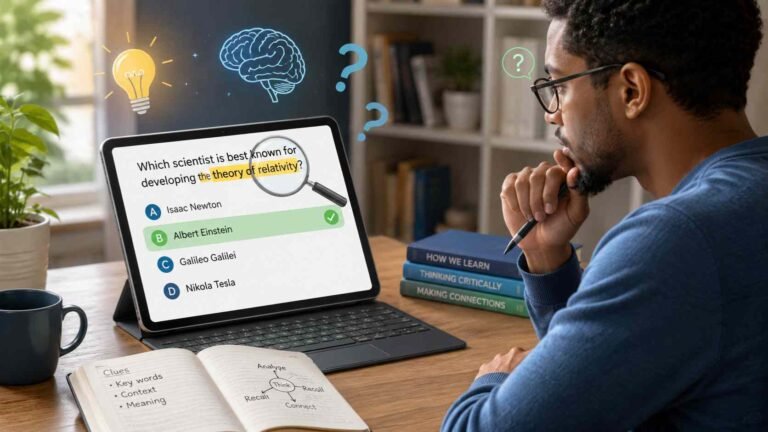
Ask: “How did we get that answer?” When answering a question from a daily news quiz, do not stop after checking whether you were right. Ask what clue pointed toward the correct answer: a date, location, person, event, or keyword.
Instead of asking, “What should I memorize?”
Ask: “What connects this to something I already know?” If you are learning about volcanoes, connect them to pressure, heat, mountains, earthquakes, island formation, or news stories about eruptions.
Following One Question Into Deeper Understanding
The Curiosity Compass works best when you follow one small question long enough to see where it leads. One good question can turn a scattered fact into a meaningful learning path.
🏛️ From a Quiz Question to History
You answer a quiz question about the fall of the Roman Empire. Instead of moving on, ask, “Why do powerful societies decline?” That can lead to military pressure, economic strain, leadership problems, migration, trade disruption, and geography.
🔬 From Science Class to Everyday Life
You learn that friction slows objects down. A curious learner asks, “Where do I see friction every day?” Now you notice bicycle brakes, shoes gripping the floor, tires on wet roads, and why ice is slippery.
📖 From Reading to Better Thinking
You read that people often believe simple explanations before complex ones. Ask, “Where have I seen this happen?” That can connect to rumors, advertising, politics, health advice, or social media headlines.
💻 From Online Learning to a Clearer Path
Online learning can feel like drinking from a fire hose. Use one guiding question: “What problem am I trying to solve?” If the problem is forgetting what you study, focus on memory, review, recall, and practice questions first.
Noticing Patterns: The Hidden Map Inside Scattered Facts
Patterns turn scattered learning into structure. A single fact may feel small, but when the same idea appears in many places, it becomes important. Patterns help your curiosity become organized instead of random.
🔗 Cause and effect
This pattern appears in history, science, economics, literature, and everyday decisions. A law changes, and behavior changes. A drought happens, and food prices rise. A character makes one choice, and the story shifts.
⚙️ Systems
A system is a group of parts that affect one another. The human body is a system. A school is a system. A government is a system. The internet is a system. A family budget is a system. When learning feels scattered, ask, “What system does this belong to?”
⏳ Change over time
History depends on this pattern, but so do science, technology, language, habits, and personal growth. Ask, “What changed, and why?” That question works for civilizations, climate, inventions, fashion trends, reading skills, and learning habits.
Using Small Interests Without Getting Lost
Small interests are powerful because they give learning energy. Maybe you are curious about ancient Egypt, black holes, famous speeches, unusual animals, old maps, court cases, or how coffee affects focus. These interests may seem random, but they can become starting points if you follow them with purpose.
1. What do I want to know first?
Do not begin with everything. Begin with one clear question: “Why were the pyramids built?” “Why can’t light escape black holes?” or “Why does this event affect ordinary people?”
2. What subject does this connect to?
Ancient Egypt connects to history, geography, religion, architecture, writing, and politics. Black holes connect to physics, math, space, gravity, and technology.
3. What can I explain in my own words?
If you cannot explain it simply, you may still be collecting information instead of understanding it. Pause and say, “Here is what I learned, and here is why it matters.”
A Simple Five-Minute Curiosity Exercise
Use this when your learning feels messy, overloaded, or directionless. It is quick enough to do after a quiz, video, article, class, or study session.
⏱️ Try this five-minute method:
- Minute 1: Write down the scattered ideas. List five things you recently learned, read, watched, or wondered about. Do not organize them yet.
- Minute 2: Circle the one that pulls you most. Choose the idea you actually want to understand, not necessarily the easiest or most impressive one.
- Minute 3: Ask three better questions. For volcanoes, you might ask: Why do volcanoes erupt? Why do some countries have more volcanoes than others? How do scientists know when one might erupt?
- Minute 4: Find one connection. Connect your topic to something else you know. Volcanoes may connect to earthquakes, mountains, islands, emergency planning, climate, or news reports.
- Minute 5: Explain the first step. Write two or three sentences beginning with “I used to think…,” “Now I understand…,” or “The next thing I want to know is…”
This small exercise turns scattered interest into a learning path.
Common Mistakes to Avoid When Learning Feels Scattered
Learning from curiosity works best when you give your attention a clear job. These mistakes can make learning feel more crowded than useful.
Trying to Learn Everything at Once
More information does not always mean more understanding. Choose one question and follow it long enough to learn something clearly.
Confusing Saving With Studying
Saving articles, videos, and screenshots can feel productive, but if you never return to them, they become digital clutter. After saving something, write why you saved it.
Only Memorizing Answers
Memorized answers fade quickly when they have no connections. After learning a fact, ask what it connects to, why it matters, and where you might see it again.
Jumping Topics Too Quickly
Curiosity is good, but constant jumping can break your focus. Give one topic a short finish line, such as explaining it clearly in five sentences.
Waiting for Perfect Organization
You do not need a perfect notebook, app, or study system to begin. Start with one question. That is enough.
How the Curiosity Compass Helps Self-Study
Self-study can be freeing, but it can also feel chaotic because no teacher is choosing the path for you. The Curiosity Compass gives you a simple rule: follow the question that creates the most useful next step.
Self-study compass questions include:
- If you are learning English: “Why does this sentence sound natural?”
- If you are learning history: “What caused this event?”
- If you are learning science: “How does this happen in real life?”
- If you are learning from quizzes: “What did this question reveal that I did not know?”
Self-study becomes easier when curiosity gives your attention a job.
Turning Scattered Learning Into a Clearer Path
The goal is not to make learning perfectly neat. Real learning is often a little messy. You will still discover unexpected ideas. You will still follow side trails. You will still have unfinished questions. That is not a problem.
The difference is that you are no longer wandering without direction. You are using curiosity as a compass. You are asking better questions, noticing patterns, connecting ideas, and choosing what to focus on next.
🌱 The useful truth
Scattered learning becomes clearer when every fact has a possible connection. Sometimes, one honest question is enough to point the way forward.
FAQ About the Curiosity Compass
What does the Curiosity Compass mean?
The Curiosity Compass means using your own questions to guide learning. Instead of trying to absorb everything, you choose one interesting or useful question and let it lead you toward deeper understanding.
How can curiosity help me study better?
Curiosity helps you focus. When you care about a question, you are more likely to notice details, remember connections, and keep learning long enough to understand the topic.
What should I do when I feel overwhelmed by too much information?
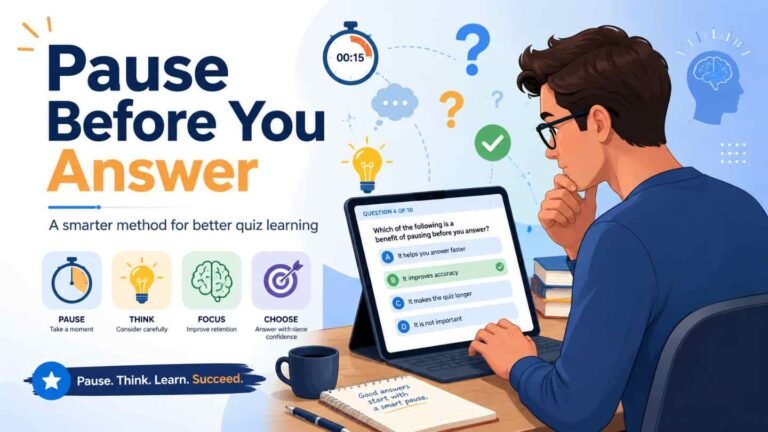
Pause and choose one question. Ask what confused you, what surprised you, or what keeps appearing again. Then follow that question for a few minutes before moving to another topic.
Can quizzes really help with deeper learning?
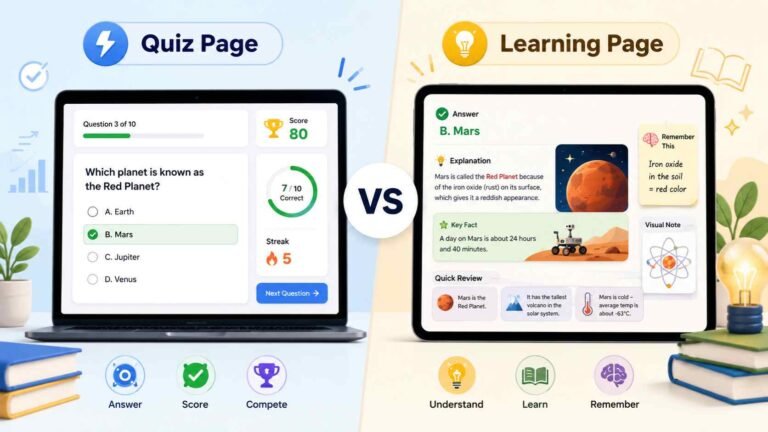
Yes, if you use them well. Do not only check whether you got the answer right. Ask why the correct answer is correct, what clue you missed, and what related idea you should learn next.
How do I connect ideas from different subjects?
Look for patterns such as cause and effect, systems, change over time, comparison, and problem-solving. These patterns appear across history, science, reading, current events, and everyday life.
Is scattered learning always bad?
No. Scattered learning can be the beginning of curiosity. The problem comes when you never connect or organize what you find. A few good questions can turn scattered ideas into a meaningful path.
Final Thoughts
The Curiosity Compass reminds us that scattered learning does not have to stay scattered. A fact, headline, quiz question, video, lesson, or confusing idea can become useful when you ask what you are genuinely trying to understand.
You do not need to learn everything at once. You only need to choose the next good question. That question can help you notice patterns, connect ideas, and turn random information into a clearer learning path.
When learning feels messy, pause. Ask what confused you, what surprised you, or what keeps appearing again. Curiosity is not a distraction from learning. Used wisely, it is the compass that helps you find your way through it.