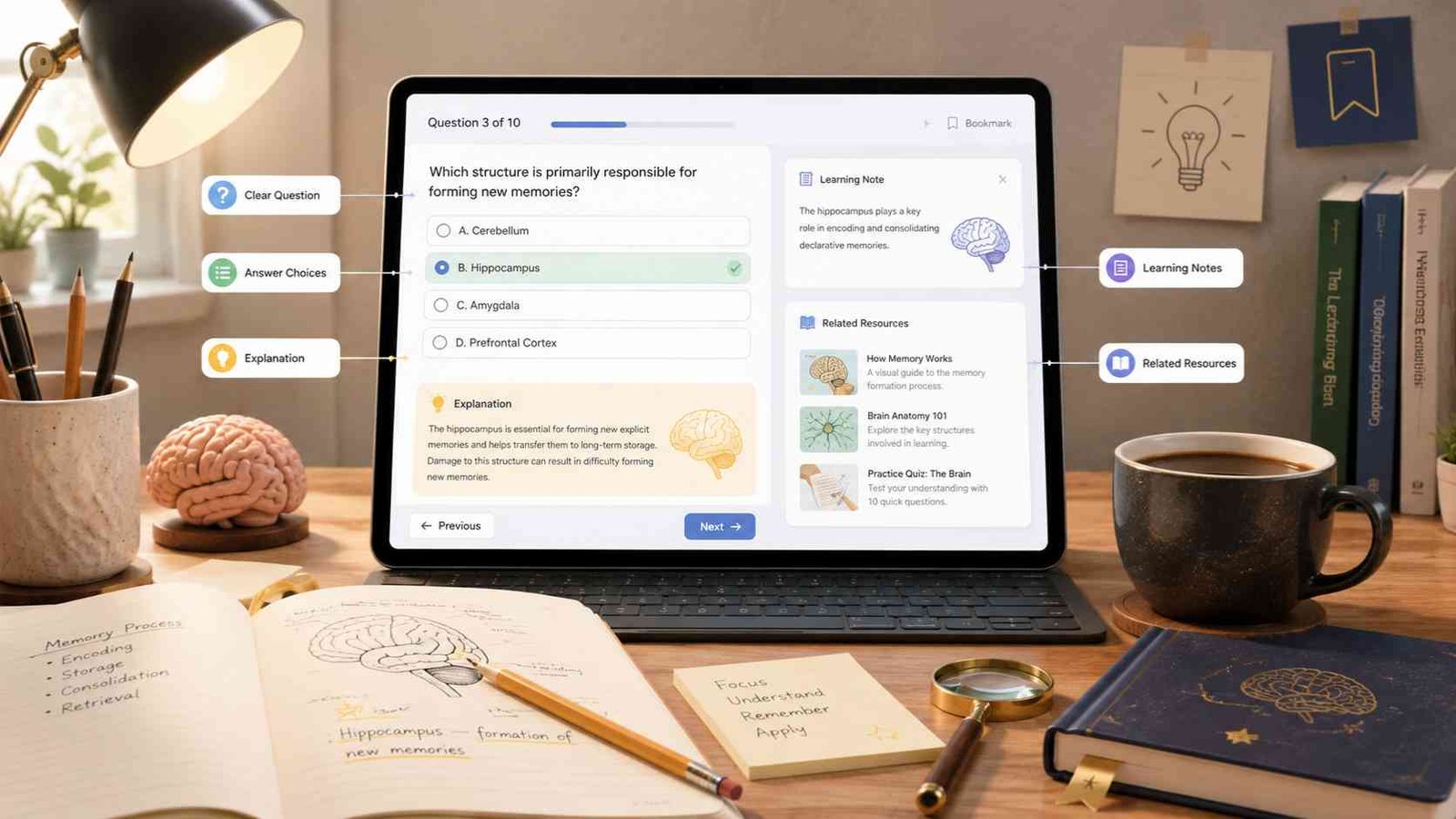
The Anatomy of a Helpful Educational Quiz Page
An educational quiz page should do more than ask questions and show a score.
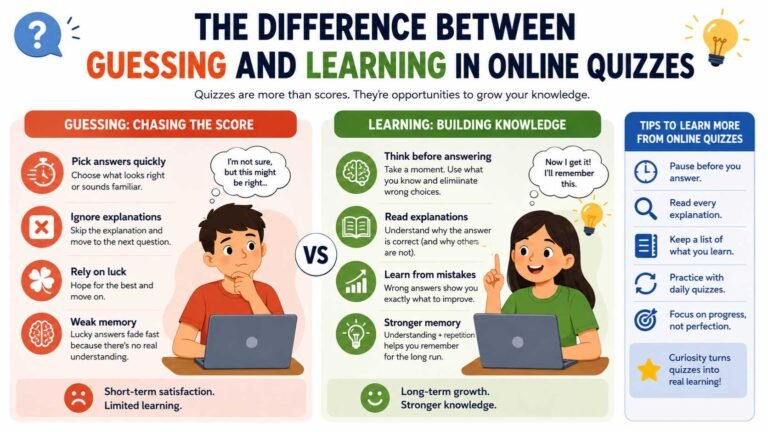
A weak quiz page says, “Pick an answer and move on.” A helpful quiz page says, “Let’s test what you know, explain what you missed, and help you remember something useful.”
That small difference matters. People visit quiz pages for different reasons. Some want to test their general knowledge. Some want a quick learning break. Others may be students, parents, teachers, trivia fans, or casual readers who simply enjoy learning one small thing at a time.
A good educational quiz page respects all of them. It should be easy to read, simple to use, and useful even when the visitor does not get every answer right.
Why an Educational Quiz Page Needs More Than Questions
Many quiz pages focus only on clicks: question, answer, next button, score. That may work for quick entertainment, but it does not always create a strong learning experience.
If a reader finishes a quiz and remembers nothing, the page missed a big opportunity. A helpful educational quiz page gives the reader context. It explains why the correct answer is correct, shares small learning notes, and may suggest what to read next.
A great quiz page should make the reader feel smarter after finishing — not just judged by a score.
Quizzes can support memory, curiosity, and recall because they ask the brain to retrieve information. But retrieval works better when the page also gives feedback. Without feedback, a quiz only shows what someone knows. With feedback, it helps them learn what they did not know yet.
The Main Parts of a Helpful Educational Quiz Page
1. A Clear Page Title
The title should tell readers exactly what the quiz is about, who it is for, and what they will gain.
2. A Short Introduction
The intro should quickly explain what the quiz covers, who it is for, and why it is worth taking.
3. Clear Questions
Questions should be simple enough to understand on the first read. Clarity tests knowledge, not patience.
4. Fair Answer Choices
Choices should be believable and useful, not dishonest tricks or random silly options.
5. Answer Explanations
Explanations turn a quiz from a guessing activity into a real learning experience.
6. Related Next Steps
Helpful links, recaps, and related quizzes keep the learning journey going.
1. A Clear Page Title
The title should tell readers exactly what the quiz is about. A title like “World History Quiz” is clear, but it may be too broad. A more helpful title could be:
“World History Quiz: Test Your Knowledge of Ancient Civilizations”
A good title should answer three simple questions:
The title does not need to be fancy. It needs to be useful.
2. A Short Introduction That Sets Expectations
The introduction should not be long. It should quickly explain what the quiz covers and why it is worth taking.
“This quiz covers simple facts about animals, geography, science, and history. Some questions may feel easy, while others may surprise you. After each answer, read the explanation to learn the reason behind it.”
That kind of introduction prepares the reader. It also encourages them to pay attention to the learning part, not just the score. The intro can also mention whether the quiz is beginner-friendly, designed for kids, made for adults, or built as a quick daily quiz.
3. Clear Questions
A quiz question should be simple enough to understand on the first read. That does not mean every question has to be easy. It means the wording should not be messy.
Poor Question
“Which of the following things is not generally considered to be something that relates to the process by which plants can make food?”
Better Question
“Which process do plants use to make their own food?”
The second version is easier to read. It tests knowledge, not patience. Clear questions help readers focus on learning, while confusing questions can make even smart readers feel lost.
4. Fair Answer Choices
Answer choices should be believable but not tricky in a dishonest way. A good multiple-choice question usually has one clear correct answer and a few reasonable wrong choices.
Which planet is known as the Red Planet?
A. Venus
B. Mars
C. Jupiter
D. Neptune
This works because the answer choices are all planets. The question feels fair. A weaker version would include choices like “banana,” “basketball,” or “cloud,” which may be funny once but does not create much learning.
For educational quizzes, the answer choices should help readers think. Even the wrong answers can teach something when they are chosen carefully.
5. Answer Explanations
This is one of the most important parts of a helpful educational quiz page. The explanation is where real learning happens.
A question can test memory, but an explanation builds understanding.
Correct answer: Mars
Explanation: Mars is called the Red Planet because iron-rich dust on its surface gives it a reddish color. It is one of Earth’s neighboring planets and has been studied by many space missions.
That explanation gives the reader more than the answer. It gives a reason, adds a useful fact, and makes the question more memorable.
What Makes Answer Explanations Useful?
They Explain the “Why”
Readers should not only know which answer is correct. They should understand why it is correct.
They Correct Misunderstandings
If a reader chooses the wrong answer, the explanation can gently fix the mistake and help them compare ideas.
They Add One Memorable Detail
A strong explanation often includes one extra fact that sticks — not five facts, not a lecture, just one useful detail.
Learning Notes Make the Page Stronger
A learning note is a small section that gives extra context beyond the quiz question. It helps readers understand the bigger idea behind a fact.
Learning Note:
“Capitals can change over time. Some countries have moved their capitals for political, historical, or geographic reasons.”
Learning notes can appear after each question, after every few questions, or near the end of the page. They are especially helpful for topics like history, science, Bible study, geography, health, finance, and current events.
A Good Quiz Page Helps Before, During, and After the Quiz
A balanced educational quiz page should be useful even before the reader starts answering. It should guide the reader through the full experience.
Before the Quiz
Explain the topic, difficulty level, and what readers can expect.
During the Quiz
Use clear questions and fair answer choices that help readers think.
After the Quiz
Give explanations, score summaries, learning notes, and related resources.
That means the page is not only a game. It becomes a small learning journey.
Related Resources Add More Value
A quiz page becomes more useful when it points readers to helpful next steps. For example, after a quiz about weather, you might link to:
Related resources help readers keep learning. They also improve the reader experience because the page does not feel like a dead end.
Practical Tips for Creating a Better Educational Quiz Page
Keep the Topic Focused
A quiz page should not try to cover everything at once. Focused pages are easier to understand and more useful for search engines and readers.
Use Simple Language
Simple does not mean childish. It means easy to follow. Use direct sentences and explain terms when needed.
Make Each Question Teach Something
Before adding a question, ask whether it helps the reader learn something, whether the answer is clear, and whether it fits the page topic.
Avoid Trick Questions
Educational quizzes should challenge people fairly. A little surprise is good. Confusing wording is not.
Add an Encouraging Score Message
The final score should not shame the reader. Encourage review and remind them that the quiz is part of learning.
How Educational Quiz Pages Support Memory
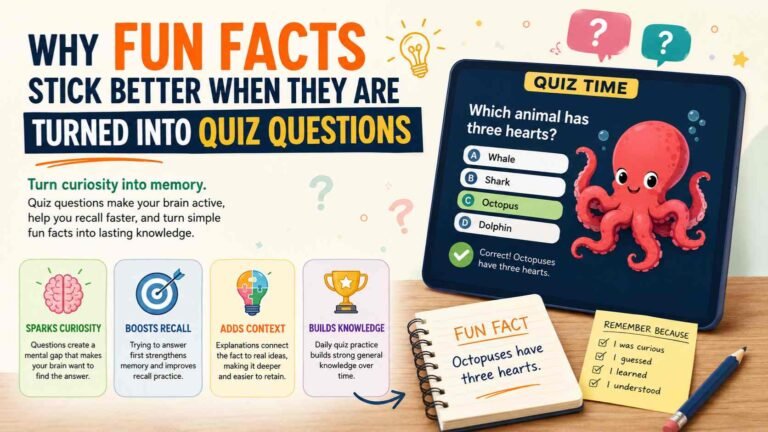
Quizzes help memory because they make the brain practice recall. Reading a fact is useful, but answering a question about that fact forces the brain to search for it.
That simple process can turn a short quiz into a strong learning tool.
How Curiosity Improves the Quiz Experience
A helpful quiz page should make readers curious. Curiosity often starts with a question.
Questions naturally create a small gap in the mind. The reader wants to close that gap by finding the answer. That is why quizzes are powerful for learning: they invite the reader to participate.
Reader Experience Matters
Even strong quiz content can fail if the page is hard to use. A helpful educational quiz page should be clean, readable, and easy to navigate.
Readers should not struggle to find the quiz. Buttons should be clear. Questions should not be buried under too many ads, pop-ups, or unrelated blocks. The page should load smoothly, especially on mobile.
The design does not need to be fancy. It needs to be comfortable.
Common Mistakes to Avoid
Too Many Questions Without Explanations
A 30-question quiz with no explanations may feel empty. It gives a score, but not much learning.
Vague Questions
If the question can be interpreted in more than one way, rewrite it.
Weak Wrong Answers
Wrong choices should make sense. If they are too obvious, the question becomes less useful.
No Learning Path After the Quiz
Do not let the page end suddenly. Offer a recap, related quiz, article, or next step.
Simple Structure You Can Use
Here is a practical structure for an educational quiz page:
This structure works because it gives readers a complete experience. They understand the topic, take the quiz, learn from the answers, and know where to go next.
FAQs About Educational Quiz Pages
What is an educational quiz page?
An educational quiz page is a web page that uses quiz questions to help readers test and improve their knowledge. A good page includes clear questions, fair answer choices, helpful explanations, and learning notes.
Why are answer explanations important in quizzes?
Answer explanations help readers understand why an answer is correct. They turn the quiz from a simple guessing activity into a learning experience and help readers remember facts more clearly.
How many questions should an educational quiz page have?
It depends on the topic and audience. A short quiz may have 5 to 10 questions, while a deeper quiz may have 15 to 25. Clear questions with helpful explanations are better than many weak questions.
Can quiz pages help with general knowledge?
Yes. General knowledge quizzes can help readers review facts about history, science, geography, culture, current events, and more. They work best when paired with explanations, short notes, and related resources.
Final Thoughts
A helpful educational quiz page is not just a place to click answers. It is a learning space.
The best quiz pages guide readers before the quiz, support them during the quiz, and help them remember something after the quiz. They use clear questions, fair choices, simple explanations, learning notes, and useful next steps.
That is what makes an educational quiz page valuable. It respects the reader’s time, makes learning feel lighter, and turns a simple quiz into something more meaningful than a score.
Explore More Educational Quizzes →