How Quiz Clues Help Readers Think Before They Answer
A good quiz question does more than ask for an answer. It invites the reader to notice something. That “something” may be a word, a date, a name, a phrase, or even the way the answer choices are written. These small hints are called quiz clues, and they can turn a quick guess into a moment of real thinking.
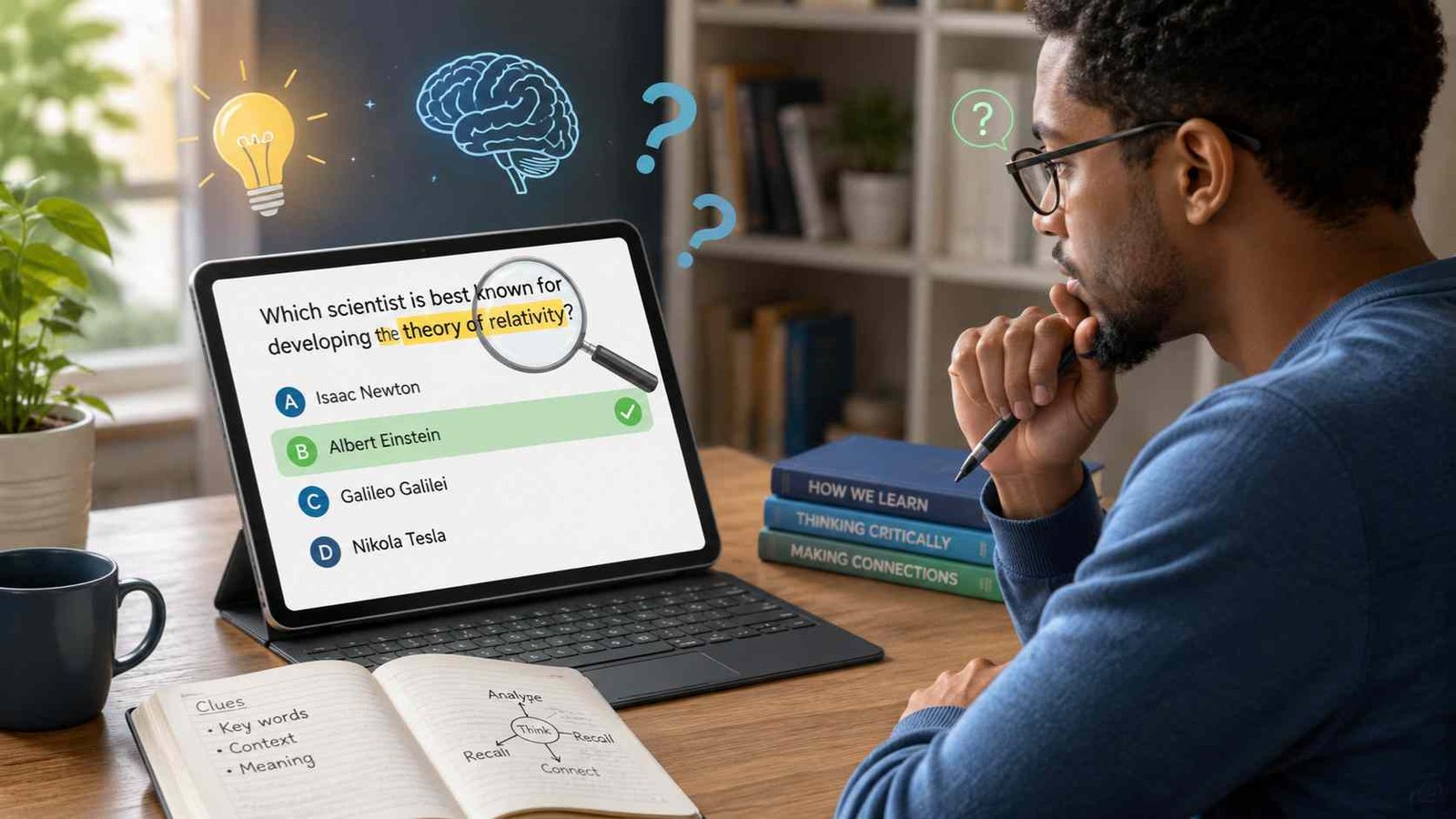
Quiz clues help readers slow down before choosing an answer. Instead of clicking the first option that looks familiar, they learn to read carefully, compare choices, and ask, “What is this question really asking?” That small pause matters. It improves focus, strengthens memory, and builds the kind of critical thinking that helps people learn beyond the quiz page.
🔎 What Are Quiz Clues?
Quiz clues are small details inside a question or answer choice that guide your thinking. They may appear in the wording, the topic, the time period, the category, or the choices themselves. For example, if a question asks, “Which planet is known as the Red Planet?” the phrase “Red Planet” is the clue that points to Mars.
Not every clue gives the answer directly. Some clues simply help you remove wrong choices. Others help you connect what you already know with the question in front of you. This is why quiz learning can be useful for general knowledge, memory improvement, and daily mental practice.
Dates
Dates help readers place facts in the right timeline.
Places
Locations often point toward the correct subject area.
Patterns
Answer choices can reveal what does or does not belong.
⏳ Why Quiz Clues Make Readers Slow Down
Many wrong answers happen because people answer too fast. They recognize one familiar word and jump to a choice without checking the full question. Quiz clues help prevent that by making the reader look closer.
For example, a question may ask, “Which country hosted the 2016 Summer Olympics?” If someone only notices “Olympics,” they might guess a famous Olympic country. But the clue is the date: 2016. That points to Brazil, specifically Rio de Janeiro. The clue helps the reader slow down and connect the right fact to the right moment.
💡 Reader Tip
Before choosing an answer, pause for five seconds and look for the strongest clue: a date, name, location, keyword, comparison word, or negative word like “not” or “except.”
🧠 How Quiz Clues Improve Critical Thinking
Critical thinking is not just for school tests or serious debates. It also shows up in small daily decisions, including how we answer quiz questions. When readers use quiz clues, they practice checking details, comparing options, and avoiding lazy guesses.
This makes educational quizzes more valuable. A reader is not only learning facts; they are learning how to think through a question. Over time, this habit can improve focus and make daily quizzes feel less like random trivia and more like short mental training.
🧭 How Quiz Clues Help Memory
Memory works better when the brain has something to connect to. A clue gives the mind a handle. It may be a date, a keyword, a location, a category, or a pattern that helps the answer stick.
For example, if a question asks, “Who wrote Romeo and Juliet?” the clue may be the title itself. A reader who connects Shakespeare with famous English plays is more likely to remember the answer next time. The clue becomes part of the memory path.
🌟 Common Types of Quiz Clues Readers Should Notice
1. Clues in the Wording
The wording of a quiz question often tells you exactly what kind of answer is needed. Words like “first,” “largest,” “oldest,” “capital,” “invented,” or “known for” are important. They narrow the question.
For example, “What is the largest ocean on Earth?” is not asking for any ocean. The word “largest” points you toward the Pacific Ocean. Small words can carry big meaning, so readers should treat them like signposts.
2. Clues in the Answer Choices
Answer choices can also contain clues. Sometimes two choices are very similar, which means the quiz is testing a specific detail. Other times, one choice clearly does not belong to the same category as the others.
If a question asks about a famous scientist and the answer choices include Albert Einstein, Isaac Newton, William Shakespeare, and Marie Curie, Shakespeare stands out because he is known as a writer, not a scientist. That does not automatically prove the answer, but it helps readers think more carefully.
3. Clues in Dates and Time Periods
Dates are some of the most useful quiz clues. A date can separate one event, leader, invention, or discovery from another. It can also stop readers from choosing an answer from the wrong time period.
For example, if a question mentions the year 1969, that clue may point to the Moon landing. If it mentions 1776 in American history, it may point to the Declaration of Independence. Dates help readers place facts in the right timeline.
4. Clues in Names and Places
Names and places often carry hidden hints. A country, city, river, mountain, or person’s name can point toward the subject area of the question. Readers should ask, “What do I associate with this name?”
If a question mentions the Nile River, the clue may lead toward Egypt or Africa. If it mentions Mount Everest, the clue may point toward Nepal, the Himalayas, or the world’s highest mountain. General knowledge improves when readers learn to connect names with meaning.
5. Clues in Context
Context is the information around the question. It may be the topic of the quiz, the theme of the section, or a sentence that gives background. Context helps readers avoid treating every question like an isolated fact.
For example, in a geography quiz, the word “Amazon” is more likely to refer to the river or rainforest than the online shopping company. In a technology quiz, the same word may mean something different. Context keeps the brain on the right track.
⚠️ How to Spot Common Quiz Traps
Some quiz questions are designed to make readers think carefully. That is not a bad thing. A good quiz should challenge attention, not just reward speed.
One common trap is the familiar-but-wrong answer. This happens when one choice looks popular or recognizable, but it does not match the question. Another trap is the “almost correct” answer, where the choice is close but not exact. Readers should always check whether the answer fits every part of the question, not just one word.
A third trap is ignoring negative wording. Questions that include words like “not,” “except,” or “least likely” require extra care. These words can completely change what the question is asking.
✅ Practical Tips for Using Quiz Clues
- Read the full question before looking at the answer choices.
- Look for clue words such as dates, places, names, categories, and comparison terms.
- Watch for words like “not,” “except,” and “least likely.”
- Eliminate answer choices that clearly do not fit.
- Choose the answer that matches every part of the question, not just one familiar word.
This simple habit can make daily quiz practice more useful, especially when you are using quizzes for memory improvement, general knowledge, or a daily test.
🚀 Why Quiz Clues Make Daily Quizzes More Useful
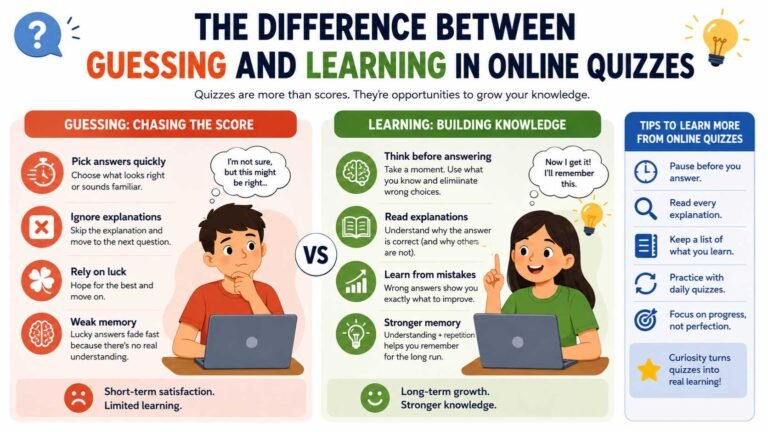
Daily quizzes are more powerful when readers do more than chase a score. A short quiz can train the brain to observe, remember, compare, and reason. Quiz clues make that process easier because they give the reader a reason to pause.
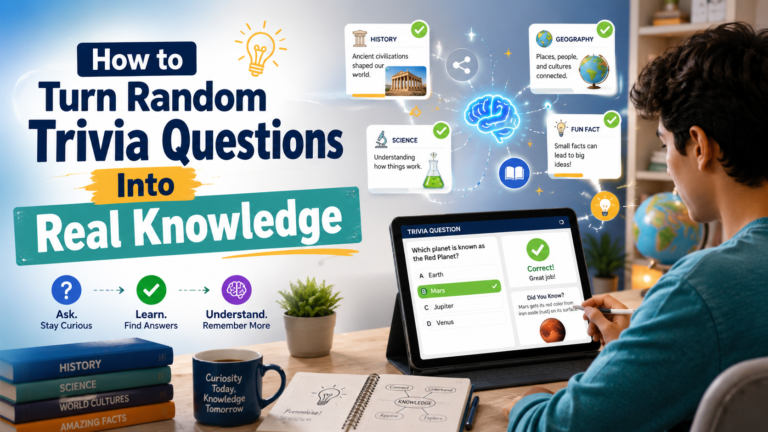
This is why quiz learning works well for curious readers. You may start with one question about history, science, geography, or culture, then notice a clue that makes you want to learn more. That curiosity is valuable. It turns a small quiz moment into a learning habit.
📘 Clues Should Guide Thinking, Not Replace Understanding
Quiz clues are helpful, but they are not magic. They can guide your thinking, but they should not replace real understanding. A reader may use clues to choose the right answer, but the best learning happens after checking the explanation.
That is where educational quizzes become stronger. The clue helps you think before answering. The explanation helps you understand why the answer is correct. When both work together, quizzes become more than a game.
❓ 7 FAQs About Quiz Clues
1. What are quiz clues?
Quiz clues are helpful details in a question or answer choice that guide your thinking. They may include dates, names, keywords, places, categories, or context.
2. How do quiz clues help readers answer better?
They help readers slow down, notice important details, and avoid rushing into a guess. This makes answers more thoughtful and accurate.
3. Can quiz clues improve memory?
Yes. Quiz clues can help the brain connect facts with dates, places, names, and meanings. These connections make information easier to remember later.
4. Are quiz clues the same as hints?
They are similar, but not always the same. A hint is usually added to help directly. A quiz clue may be naturally built into the question or answer choices.
5. What is the best way to find clues in a quiz question?
Read the full question carefully. Look for words that limit the answer, such as “first,” “largest,” “not,” “except,” “capital,” “invented,” or a specific date.
6. Why do answer choices matter?
Answer choices can reveal patterns. Some may be clearly wrong, too broad, from the wrong category, or close but not exact. Comparing them helps sharpen critical thinking.
7. Should readers rely only on quiz clues?
No. Quiz clues should guide thinking, but real learning comes from understanding the explanation. The best quiz practice combines clues, reasoning, and review.
Quiz clues help readers think before they answer. They encourage careful reading, better focus, stronger memory, and sharper critical thinking. The goal is not to find shortcuts, but to notice details and make smarter choices. When clues are paired with clear explanations and regular review, even a simple quiz can become a useful tool for daily learning.