Importance of Education: Why It Matters for Every Person and Every Society
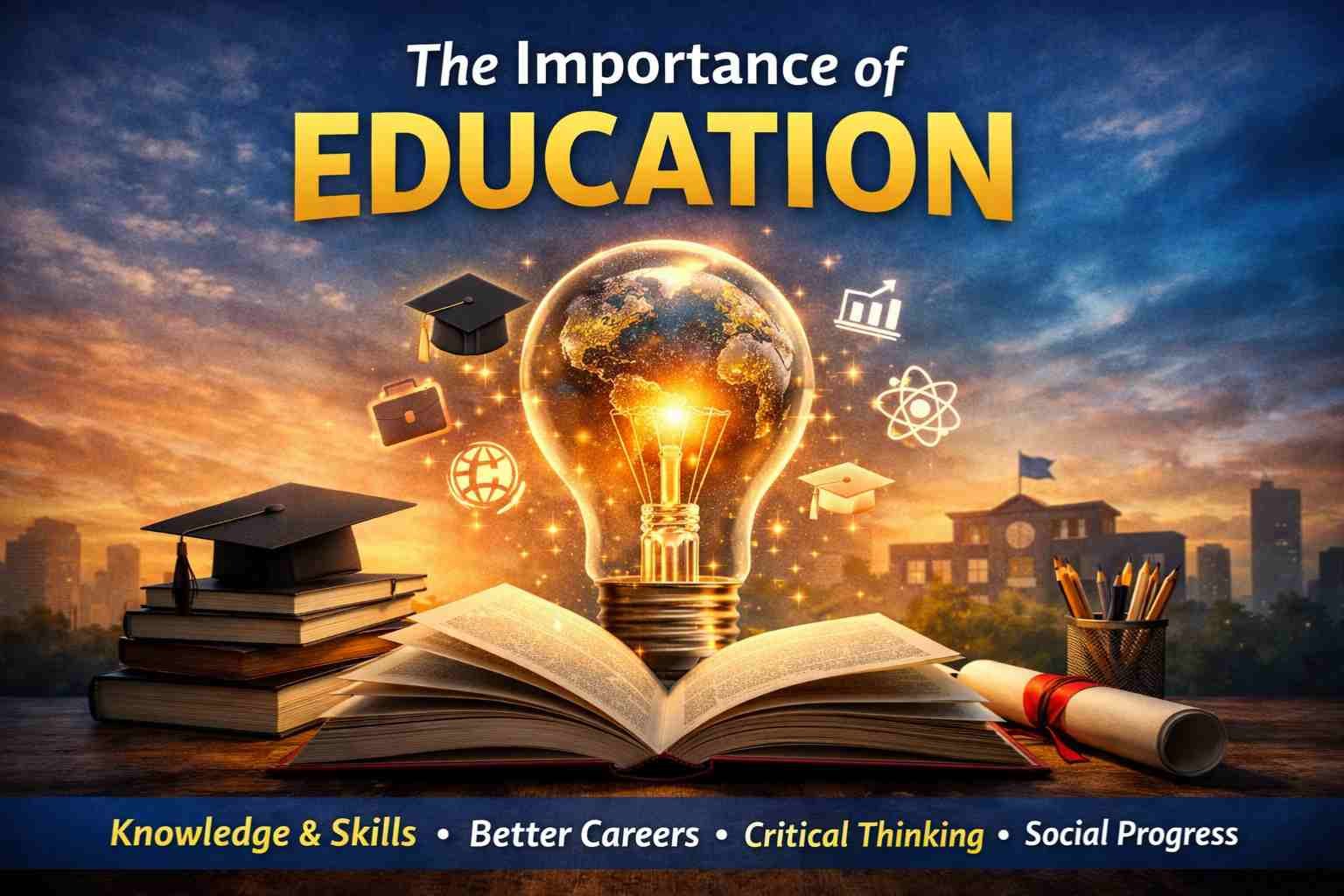
Education reaches far beyond classrooms, exams, and diplomas. It is the lifelong process through which people develop knowledge, practical abilities, judgment, values, and the confidence to participate in the world. It begins in early childhood, continues through school and work, and grows whenever a person reads, practices, asks questions, receives guidance, or learns from experience.
Its importance can be seen in ordinary moments: understanding a medicine label, comparing job offers, recognizing a misleading headline, preparing a household budget, explaining an idea clearly, or learning a new digital tool. Quality education does not guarantee wealth, perfect health, or success. It does, however, expand the range of choices a person can understand and pursue.
Education is both a human right and a public good. UNESCO describes it as a lifelong process that equips learners with the knowledge, skills, and values needed to build a better future. Its benefits can extend from the individual learner to families, workplaces, communities, and national development.
What Education Really Includes
People sometimes use the word education as though it means only formal schooling. In reality, learning takes several forms, and each can serve a different purpose.
Structured learning in schools, colleges, universities, and accredited programs that usually follows a curriculum.
Practical preparation for trades, technologies, services, and occupations requiring specialized competence.
Organized learning outside the traditional school system, including workshops, community programs, and workplace training.
Knowledge gained through reading, mentoring, observation, practice, online resources, projects, and daily experience.
A degree can be valuable, but it is not the only meaningful educational pathway. Apprenticeships, certifications, short courses, professional development, adult literacy programs, and carefully chosen online lessons can also improve a person’s capabilities.
Education Builds the Foundations for Everyday Life
Literacy and numeracy are not merely school subjects. They are tools for navigating modern life. Reading helps people interpret instructions, forms, safety warnings, contracts, public information, and news. Numeracy supports budgeting, measurement, comparison, planning, and the evaluation of financial claims.
- Understanding information: Education improves a person’s ability to locate, interpret, organize, and apply information rather than simply receive it.
- Solving problems: Learning introduces methods for breaking complex questions into smaller parts, testing ideas, and revising an approach when it does not work.
- Communicating clearly: Reading, writing, listening, and speaking practice help people explain their needs, defend a position, and cooperate with others.
- Adapting to change: People who understand how to learn are better prepared to acquire unfamiliar skills when technology, work, or circumstances change.
These foundations are especially important in a digital environment where useful knowledge sits beside advertising, rumor, manipulated media, and confident but inaccurate claims.
Education Strengthens Critical Thinking
Good education is not the memorization of disconnected facts. At its best, it teaches learners how to examine evidence, notice assumptions, compare explanations, identify missing information, and distinguish a strong argument from a weak one.
- Check who created a claim and whether the source has relevant expertise.
- Separate evidence from opinion, persuasion, or emotional language.
- Compare several credible sources before accepting a major conclusion.
- Recognize that uncertainty is sometimes more honest than a simple answer.
- Change a conclusion when better evidence becomes available.
Education can support critical thinking, but attendance alone does not produce it automatically. Learners need opportunities to question, discuss, investigate, create, receive feedback, and apply knowledge to unfamiliar situations.
Education Expands Career and Income Opportunities
Education can make more occupations accessible by building literacy, technical knowledge, digital competence, communication ability, and recognized qualifications. It can also help workers retrain when an industry changes or when a new role requires different skills.
The World Bank reports a global average association of roughly nine percent higher hourly earnings for each additional year of schooling. That figure is a broad international estimate—not a promise for every person. Actual outcomes vary according to education quality, field of study, location, work experience, labor demand, discrimination, economic conditions, and access to professional networks.
Average global increase in hourly earnings associated with one additional year of schooling, according to the World Bank. Individual results can differ substantially.
Career value also comes from what a learner can do, not merely from the certificate received. Employers may look for evidence of reliability, problem-solving, teamwork, writing, data skills, customer understanding, technical competence, and the ability to continue learning.
Education Can Improve Health and Practical Decision-Making
Education is associated with better health outcomes at the population level, although the relationship is influenced by income, working conditions, access to healthcare, housing, public policy, and many other factors. One practical reason is that educated individuals may be better equipped to understand health information, evaluate risks, communicate with professionals, and follow complex instructions.
Health literacy can help people interpret dosage directions, vaccination information, nutrition labels, screening recommendations, and public-health guidance. The same reasoning skills can also improve household decisions involving credit, insurance, contracts, and online privacy.
| Area of life | How education may help | What education cannot guarantee |
|---|---|---|
| Health | Understanding guidance, asking informed questions, and assessing risks | Access to affordable care or freedom from illness |
| Money | Budgeting, comparing costs, reading terms, and recognizing unrealistic promises | A high income, profitable investments, or protection from every loss |
| Career | Building qualifications, occupational skills, and adaptability | Immediate employment or equal treatment in the labor market |
| Digital life | Evaluating sources, protecting information, and using tools responsibly | Complete protection from fraud, misinformation, or data misuse |
Education Supports Confidence and Communication
Confidence often grows when people gain competence. A learner who has practiced writing, presenting, calculating, repairing, designing, or analyzing is more likely to approach similar tasks with a workable method. This is different from empty self-assurance: it is confidence grounded in preparation and experience.
Education also creates opportunities to communicate with people who hold different ideas and backgrounds. Through discussion, group work, feedback, and revision, learners can become better at listening, explaining disagreement respectfully, negotiating, and contributing to shared goals.
Education Can Advance Equality and Social Mobility
Access to quality learning can widen opportunity for people whose choices have been limited by poverty, geography, disability, discrimination, conflict, or social exclusion. Education may help a learner qualify for work, understand legal rights, use public services, start a business, or support the next generation.
However, education does not erase inequality by itself. A school system may reproduce disadvantage when some learners lack trained teachers, safe facilities, internet access, books, transportation, nutritious food, assistive support, or instruction in a language they understand. Equity therefore requires more than opening a classroom door; it requires helping different learners obtain a genuine chance to succeed.
- Affordable, safe, and inclusive learning environments
- Qualified teachers with adequate resources and support
- Accessible materials for learners with disabilities
- Relevant academic, technical, and vocational pathways
- Second-chance opportunities for youth and adults
Education Strengthens Communities and Economies
Societies depend on people who can teach, build, calculate, care, design, repair, research, organize, and lead. Education helps prepare nurses, engineers, farmers, accountants, electricians, teachers, entrepreneurs, scientists, technicians, public servants, and many other contributors.
At a wider level, the quality of learning matters for productivity, innovation, institutional capacity, and long-term economic development. Education is also associated with civic participation and social outcomes, although these relationships are shaped by political institutions, culture, opportunity, and trust.
Civic learning can help people understand public issues, evaluate competing proposals, take part in community decisions, and recognize both rights and responsibilities. Responsible citizenship is not simply knowing how government works; it also involves listening, verifying information, respecting lawful disagreement, and considering how decisions affect other people.
Education Encourages Personal Growth
Learning can shape habits that extend beyond a subject. Completing a difficult course, practicing a craft, or revising a failed project may develop patience, responsibility, persistence, and humility. Learners discover that improvement usually comes through repeated effort rather than instant talent.
Showing up consistently, practicing deliberately, and completing work even when motivation changes.
Managing time, meeting commitments, acknowledging mistakes, and understanding the effects of one’s choices.
Asking why something works, exploring unfamiliar subjects, and remaining open to better explanations.
Encountering histories, cultures, ideas, and experiences beyond one’s immediate surroundings.
Lifelong Learning Matters More Than Ever
Education does not end at graduation. Tools, industries, scientific knowledge, and workplace expectations continue to change. UNESCO’s lifelong-learning framework includes formal, non-formal, and informal learning across all ages—from early childhood and schooling to adult education, vocational training, professional development, and self-directed study.
Lifelong learning is not about collecting endless certificates. It is about maintaining the capacity to understand new situations and respond intelligently. A useful learning routine can be modest and still make a difference.
- Choose one practical goal. Define what you want to understand or do, such as creating a budget, improving business writing, or learning spreadsheet formulas.
- Use credible materials. Prefer textbooks, recognized institutions, official documentation, experienced instructors, and sources that explain their evidence.
- Practice retrieval. Close the material and try to explain the idea from memory. Quizzes and flashcards are useful when they require genuine recall.
- Apply the skill. Build a small project, solve a realistic problem, teach the concept, or use the skill in daily life.
- Review mistakes. An error is most valuable when you understand why it happened and adjust your method.
Turn learning into a daily habit
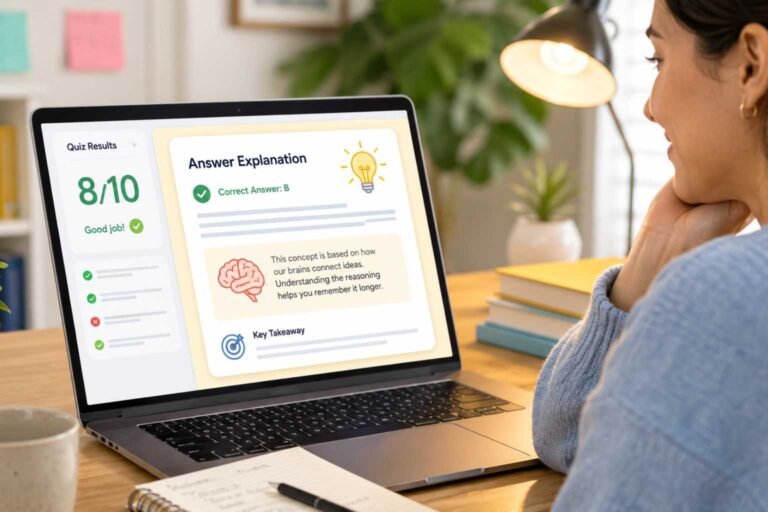
Short, well-designed quizzes can help you retrieve information, identify gaps, and revisit topics that need more study. Explore the educational activities at Bing Quizzes for a quick way to keep your general knowledge active.
Explore daily Bing quizzesCommon Misunderstandings About Education
“Education is valuable only when it leads directly to a job.”
Employment is an important benefit, but education can also develop health literacy, communication, civic understanding, creativity, personal agency, and the ability to make informed decisions.
“A degree proves that someone has mastered every relevant skill.”
A qualification can show that a learner completed a recognized program, but competence still depends on the quality of instruction, depth of understanding, practice, and continued development.
“People stop learning when they leave school.”
Adults continue learning through work, family responsibilities, reading, training, community participation, hobbies, mentoring, and new technology. Much of this learning is informal but still significant.
“More years in school always produce better results.”
Time in education matters, but learning quality matters too. Students benefit when teaching is effective, content is relevant, classrooms are safe, and acquired skills can be used in real situations.
Frequently Asked Questions
Why is education important in simple terms?
Education helps people understand the world, develop useful skills, communicate clearly, make better-informed choices, and pursue a wider range of opportunities.
Is education only about school and university?
No. Education includes formal schooling, vocational preparation, workplace training, community learning, short courses, mentoring, self-study, and practical experience.
Does education guarantee a high-paying career?
No. Education is associated with stronger employment and earnings outcomes on average, but individual results depend on many factors, including skill quality, field, location, experience, opportunity, and labor-market conditions.
How does education help society?
It prepares people for essential occupations, supports innovation and productivity, strengthens institutions, and can encourage informed civic participation and social cooperation.
Why is lifelong learning necessary?
Knowledge and technology change. Continuing to learn helps people update their skills, adapt to new responsibilities, understand emerging issues, and remain capable throughout life.
Evidence and accuracy note
This article describes broad patterns supported by major international education organizations. Associations between education and outcomes such as earnings, health, mobility, or civic participation should not be interpreted as guarantees for every individual. Personal and national outcomes also depend on education quality, economic conditions, public services, institutions, and access to opportunity.
Final Thoughts
The deepest value of education is not that it fills a person with facts. It develops the capacity to keep learning, test ideas, communicate, create, and act with greater understanding. It can open doors, but it also helps people recognize which doors are worth opening.
For students, parents, workers, entrepreneurs, and lifelong learners, education remains one of the most durable investments available. Its return is measured not only in qualifications or income, but also in stronger judgment, broader opportunity, greater adaptability, and a more informed contribution to society.