Early Childhood Education: Benefits, Importance, and Complete Guide
The early years of a child’s life are not just a warm-up for “real school.” They are the foundation. From birth to around age eight, children are learning at a remarkable pace, building language, emotions, habits, confidence, memory, movement, curiosity, and social skills all at once.
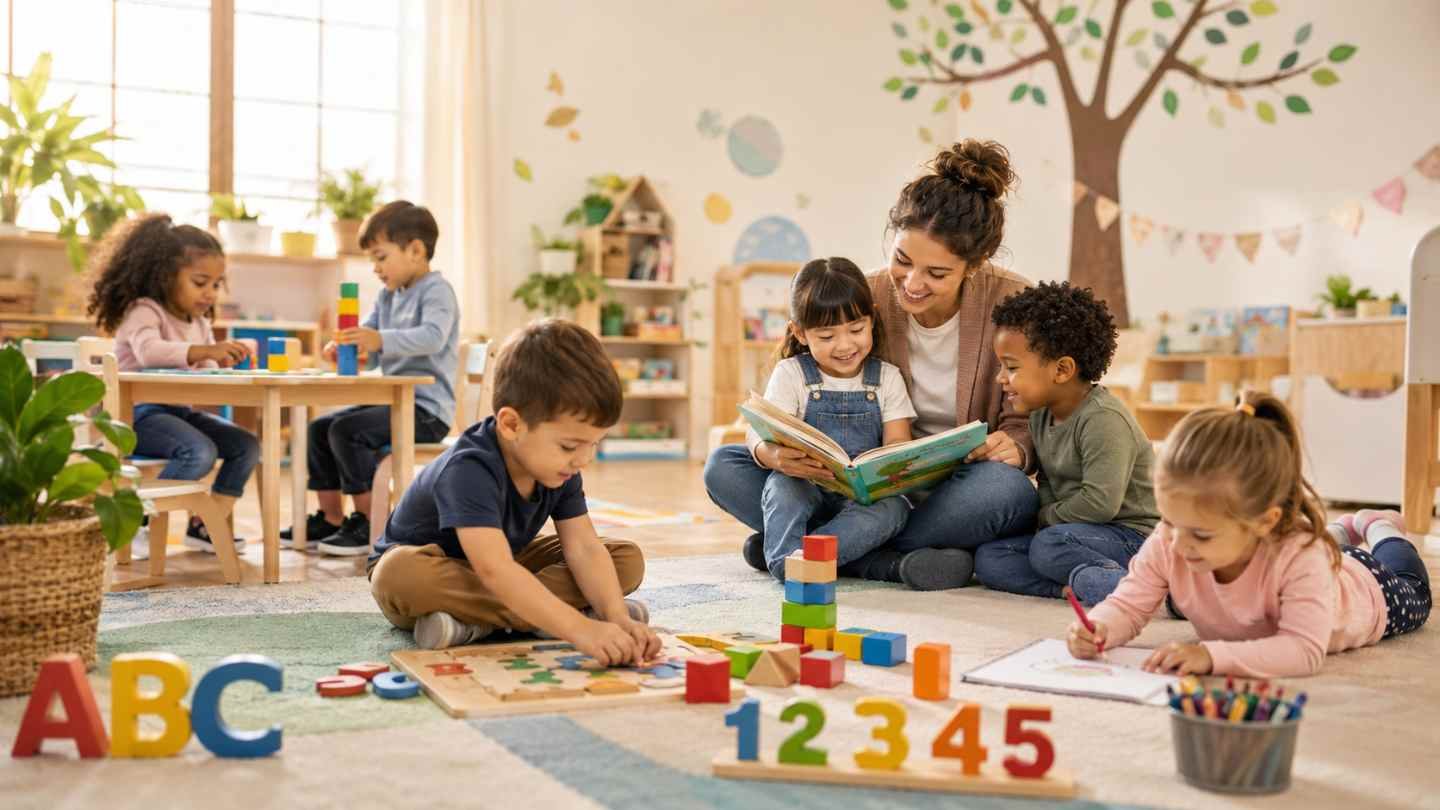
A simple storytime, a game of stacking blocks, a conversation at breakfast, or a song with hand movements can shape how a child thinks, feels, speaks, and connects with others. These small everyday moments become the quiet building blocks of lifelong learning.
That is why early childhood education matters so much. It gives children a safe, caring, and stimulating environment where they can learn through play, exploration, routine, guidance, and relationships without rushing them into pressure-filled academics too soon.
What Is Early Childhood Education?
Early childhood education refers to learning programs, experiences, and activities designed for young children, usually from birth to age eight. This includes daycare, preschool, nursery school, kindergarten, early learning centers, home-based learning, and parent-guided activities.
At its best, early childhood education supports the whole child. It does not focus only on letters and numbers. It also helps children grow emotionally, socially, physically, creatively, and mentally.
✨ Early childhood education includes:
- Learning through play
- Storytelling and reading
- Music, movement, and art
- Social interaction with other children
- Guided routines and classroom habits
- Problem-solving activities
- Language and communication practice
- Physical development through active play
- Emotional support and self-regulation
A good early learning environment feels safe, warm, structured, and curious. Children are encouraged to ask questions, try new things, make mistakes, express feelings, and learn how to get along with others.
Why Early Childhood Education Matters
Early childhood education matters because young children are forming the basic skills they will use for the rest of their lives. Before a child can succeed in reading, writing, math, science, and social life, they need important building blocks: attention, listening, patience, vocabulary, confidence, curiosity, self-control, and the ability to follow simple instructions.
These skills do not appear overnight. They are built through daily experiences. When a child waits for a turn during a game, they practice patience and social awareness. When they describe a drawing, they build language. When they build a tower and it falls, they learn problem-solving. When they hear a story, they develop memory, imagination, and listening skills.
💡 The heart of early education
Early education helps children become ready not only for school, but for life. It teaches them how to listen, express themselves, care for others, solve small problems, and feel confident enough to keep learning.
Major Benefits of Early Childhood Education
🏫 Builds School Readiness
Children become more comfortable with classroom routines, group time, listening to a teacher, following directions, sharing materials, and participating in simple lessons.
🗣️ Supports Language Skills
Early learning gives children many chances to hear new words, speak in sentences, ask questions, sing songs, listen to stories, and talk with adults and peers.
🤝 Encourages Social Skills
Children learn how to share, take turns, cooperate, respect personal space, listen to others, join a group, and handle small conflicts kindly.
💛 Strengthens Emotional Growth
Teachers help children understand feelings, calm down, ask for help, manage frustration, and try again after disappointment.
🌟 Builds Confidence
Small successes such as completing a puzzle, zipping a bag, answering a question, or helping clean up toys teach children that they are capable.
🧠 Develops Thinking Skills
Matching shapes, sorting colors, building with blocks, counting objects, and asking “why” questions help children develop memory, attention, reasoning, and problem-solving.
How Early Childhood Education Supports the Whole Child
Quality early childhood education is not only about preparing children for academics. It also supports their bodies, emotions, friendships, imagination, communication, and confidence. Young children learn best when their whole development is cared for, not just one part of it.
🏃 Physical Development
Running, jumping, climbing, drawing, cutting, pouring, stacking, and threading support both large and small muscle development.
🎨 Creativity
Art, music, pretend play, storytelling, and building activities help children express ideas and explore possibilities.
👨👩👧 Family Support
Early education gives parents guidance, structure, reassurance, and helpful observations about their child’s strengths and needs.
🌍 Community Benefits
Strong early learning can contribute to healthier families, stronger schools, and more responsible future citizens.
Important Skills Children Learn in Early Childhood Programs
Early childhood programs teach far more than ABCs and numbers. Many of the most important lessons are life skills that help children succeed in school, relationships, and everyday routines.
💛 Emotional skills
Children learn how to name feelings, calm down, ask for help, handle disappointment, and try again after mistakes.
- Saying, “I feel sad”
- Taking deep breaths
- Waiting before reacting
- Asking a teacher for help
- Trying again after a failed attempt
🤝 Social skills
Children learn how to interact with others in kind and respectful ways.
- Sharing toys
- Taking turns
- Listening to classmates
- Saying “please” and “thank you”
- Joining group activities
- Solving small conflicts
🗣️ Language skills
Children build vocabulary, sentence structure, listening skills, and confidence in speaking.
- Listening to stories
- Retelling simple events
- Singing songs
- Describing objects
- Asking and answering questions
🧠 Cognitive skills
Children develop thinking, memory, attention, reasoning, and early problem-solving.
- Sorting by color or size
- Matching shapes
- Completing puzzles
- Counting objects
- Noticing patterns
- Asking “what happens if?”
The Role of Parents and Caregivers
Parents and caregivers are a child’s first teachers. Long before a child enters a classroom, learning begins at home. Everyday moments can become powerful learning opportunities. Talking during meals, reading before bedtime, counting toys, naming colors, singing songs, and asking simple questions all support early development.
Parents can support early learning by:
- Reading aloud every day
- Talking with children often
- Creating simple routines
- Encouraging curiosity
- Giving children time to play
- Praising effort, not only results
- Listening patiently
- Teaching kindness and respect
- Limiting passive screen time
- Helping children name emotions
A child does not need expensive materials to learn. A spoon, a cardboard box, a picture book, a song, a walk outside, or a warm conversation can become a meaningful lesson. Parents also help children feel safe, and when children feel safe, they are more ready to explore, ask questions, and learn.
The Role of Teachers and Early Learning Centers
Teachers and early learning centers play a major role in guiding young children’s development. A good early childhood teacher does more than supervise. They observe, encourage, model behavior, ask thoughtful questions, and create activities that match children’s age and needs.
Good early childhood teachers:
- Create a safe and welcoming classroom
- Understand child development
- Use play as a learning tool
- Encourage communication
- Support emotional regulation
- Respect each child’s pace
- Build positive routines
- Communicate with families
- Notice strengths and concerns early
- Make learning joyful and meaningful
Early learning centers should feel organized but not overly rigid. Children need structure, but they also need freedom to explore. The best classrooms are calm, engaging, caring, and full of opportunities to learn through movement, conversation, creativity, and discovery.
Examples of Activities That Support Early Learning
Early learning activities do not need to be complicated. The best ones are often simple, playful, and hands-on.
📚 Storytime
Reading picture books helps children build vocabulary, listening skills, imagination, and emotional understanding.
🧱 Building Blocks
Blocks help children learn balance, size, shape, planning, creativity, and problem-solving. A falling tower can become a lesson in patience.
🧸 Pretend Play
Pretend play helps children practice language, social roles, empathy, imagination, and communication.
🎨 Art Activities
Drawing, painting, cutting, and pasting help develop fine motor skills and give children a way to express feelings and ideas.
🎵 Music and Movement
Songs, clapping games, dancing, and rhythm activities support memory, coordination, language, and joy.
🌳 Outdoor Play
Running, climbing, digging, collecting leaves, watching insects, and playing with sand or water support physical growth and curiosity.
🎯 Gentle quizzes and questions
Gentle quiz-style activities can help children recall information, practice thinking, and enjoy learning. For older children and families, online activities like a news quiz for learners or a fun entertainment quiz can encourage curiosity when used appropriately and with guidance.
How to Choose a Good Early Childhood Education Program
Choosing the right early childhood education program can feel overwhelming, but a few key signs can help parents and caregivers make a thoughtful decision.
🛡️ Safe and Clean Environment
The space should be clean, child-friendly, well-supervised, and safe for movement, rest, routines, and play.
👩🏫 Warm Teachers
Teachers should be patient, attentive, respectful, and calm. Their attitude matters as much as the lesson plan.
🕒 Balanced Daily Routine
A good program includes structured learning, free play, outdoor time, meals, rest, stories, music, and creative activities.
🌈 Play-Based Learning
Look for programs that value play, social development, language growth, creativity, emotional support, and joyful discovery.
👀 Good Supervision
Ask about class size, teacher-child ratios, bathroom routines, meals, naps, transitions, and safety policies.
💬 Parent Communication
A strong program keeps families informed about behavior, learning, routines, concerns, progress, and helpful next steps.
Common Myths About Early Childhood Education
Myth 1: Young children are too little to learn.
Children are learning from the very beginning through voices, faces, touch, movement, repetition, and play. Early education guides this natural learning in a safe and meaningful way.
Myth 2: It is just babysitting.
Quality early childhood education is much more than supervision. It supports language, behavior, confidence, problem-solving, creativity, movement, and social skills.
Myth 3: Play is not real learning.
Play is one of the most powerful ways young children learn. Through play, children practice thinking, speaking, sharing, planning, imagining, and solving problems.
Myth 4: Early education should focus only on reading and math.
Reading and math matter, but children also need emotional, social, physical, and creative development to become ready for learning.
Myth 5: Parents need expensive toys to teach children.
Children can learn from ordinary household items, books, songs, conversations, routines, and outdoor experiences.
Simple Tips for Supporting Early Learning at Home
- Read together daily. Even ten minutes of reading can make a difference.
- Talk during everyday routines. Describe what you are doing while cooking, cleaning, walking, or shopping.
- Let children help. Simple tasks such as matching socks or watering plants build independence and confidence.
- Encourage questions. When a child asks “why,” answer simply or ask, “What do you think?”
- Praise effort. Say, “You worked hard on that puzzle,” or “I like how you tried again.”
- Create predictable routines. Regular times for meals, play, reading, rest, and bedtime help children feel secure.
- Limit passive screen time. Young children learn best from real interaction, movement, touch, and exploration.
- Provide time for free play. Unstructured play helps children make choices, use imagination, and practice independence.
- Model kindness and patience. Children learn by watching how adults speak, apologize, listen, and handle frustration.
FAQ About Early Childhood Education
What age is best for early childhood education?
Early childhood education can begin from birth through everyday interaction, care, play, and language. Formal programs often begin around ages two to five, depending on the child, family needs, and available programs.
Is preschool necessary for every child?
Preschool can be very helpful, but children also learn deeply at home. What matters most is love, safety, conversation, play, routine, and opportunities to explore.
What should children learn before kindergarten?
Children benefit from learning routines, listening skills, social behavior, emotional awareness, early language, fine motor skills, and simple concepts like colors, shapes, numbers, and letters.
How does early childhood education help with behavior?
It helps children practice sharing, waiting, following directions, expressing feelings, and solving conflicts with patient guidance.
Is play-based learning effective?
Yes. Play-based learning is highly effective for young children because it matches how they naturally explore the world and build language, thinking, movement, creativity, and social skills.
How can parents support early education at home?
Parents can support early learning by reading daily, talking often, encouraging play, creating routines, asking questions, giving simple responsibilities, and praising effort.
Conclusion: Investing in the Early Years Is Investing in the Future
Early childhood education is one of the most meaningful investments we can make in a child’s life. The early years shape how children see themselves, relate to others, handle emotions, solve problems, and approach learning.
Parents, caregivers, teachers, and early learning centers all have an important role. When they work together, children receive the support they need to grow not only as students, but as whole people.
The goal is not to pressure children to grow up too fast. The goal is to give them the right environment to grow well. With love, play, guidance, patience, and meaningful learning experiences, the early years can become a powerful foundation for lifelong learning.