The Pause Before You Answer Method for Better Quiz Learning
Most people treat a quiz question like a race. They see the question, spot an answer that looks familiar, and click before their brain has finished checking the details. That quick reaction feels natural, especially in daily quizzes where the goal is often fast and fun learning.
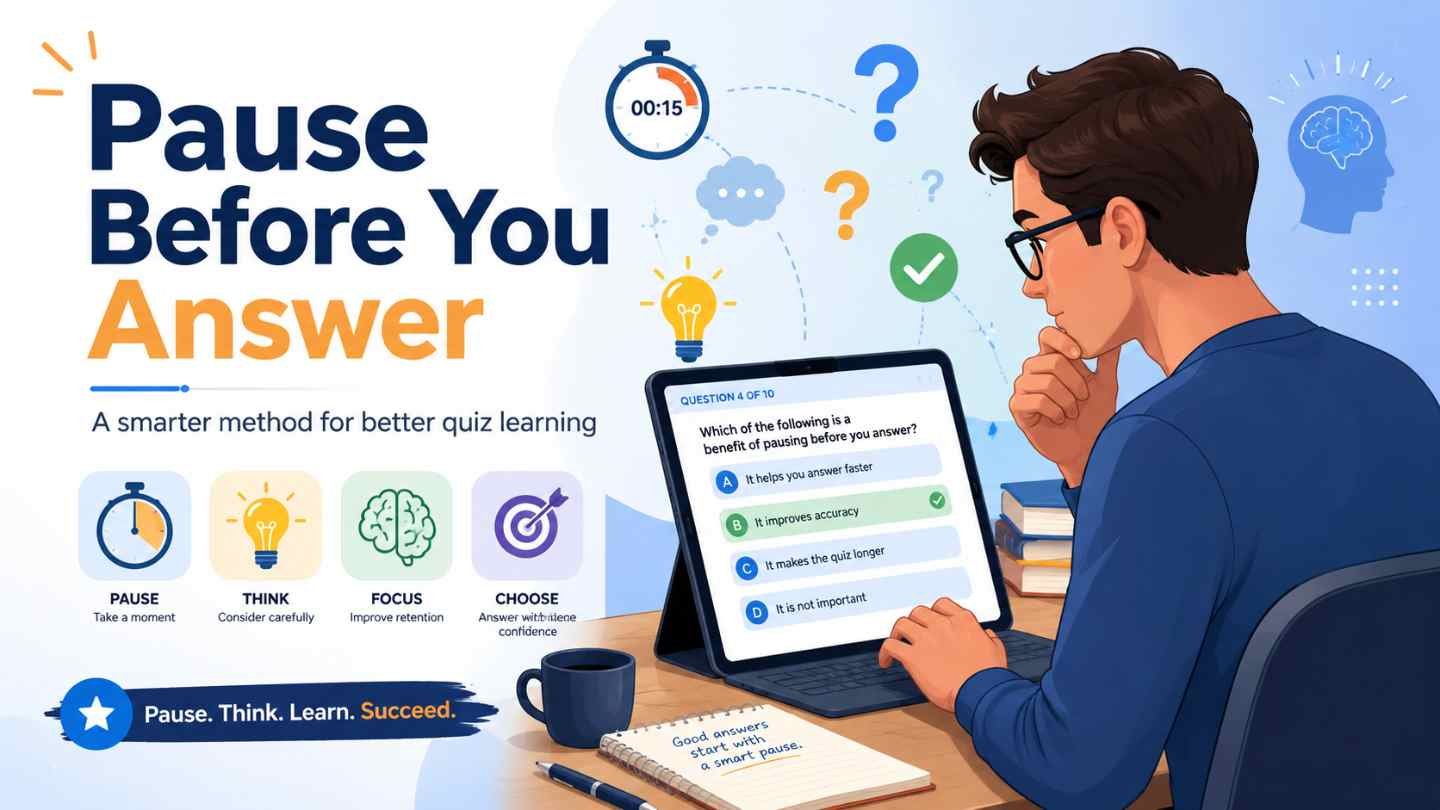
But one small habit can change how you learn from every question: pause before you answer. The pause is not just a delay. It is a tiny thinking space between recognition and response.
In that short moment, your brain gets a chance to separate what you actually know from what only looks familiar. That makes the pause before you answer method useful not only for getting more quiz questions right, but also for building stronger learning habits over time.
What Does “Pause Before You Answer” Mean?
The pause before you answer method means taking a short moment before choosing an answer in a quiz. It does not mean overthinking every question or slowing yourself down too much.
It simply means giving your mind enough time to read the question properly, notice key words, compare the answer choices, and recall what you already know.
Simple Example
If a question asks, “Which planet is known as the Red Planet?” you may immediately want to click Mars. That answer is correct, but the pause still helps because it trains your brain to confirm the question before reacting.
Why Pausing Helps You Think More Clearly
A quiz question often contains clues, but you can miss them when you answer too quickly. Words like “first,” “largest,” “not,” “except,” “oldest,” or “most recent” can completely change what the question is asking.
A short pause gives you time to catch those details before you choose. This is where quiz learning becomes more than guessing. When you pause, you are not just hunting for a familiar answer. You are asking, “What is this question really asking me?” That small shift improves focus, reduces careless mistakes, and helps you practice clearer thinking.
🔍 Words that deserve a pause
The Pause Stops Familiarity From Tricking You
One of the biggest problems in educational quizzes is confusing familiarity with knowledge. An answer may look familiar because you have seen the word before, but that does not always mean it is correct.
Imagine a general knowledge question with four answer choices: Isaac Newton, Albert Einstein, Galileo Galilei, and Nikola Tesla. All four names may feel familiar, but only one fits the question. Pausing helps you connect the clue to the correct person instead of choosing the name that simply “feels right.”
💡 The key question
Do I truly know this answer, or does it only look familiar? That tiny question can prevent many careless quiz mistakes.
How Pausing Supports Memory Improvement
Memory improvement does not happen only after a quiz. It also happens during the moment you try to remember. When you pause before answering, you give your brain a chance to search for the fact instead of depending only on recognition.
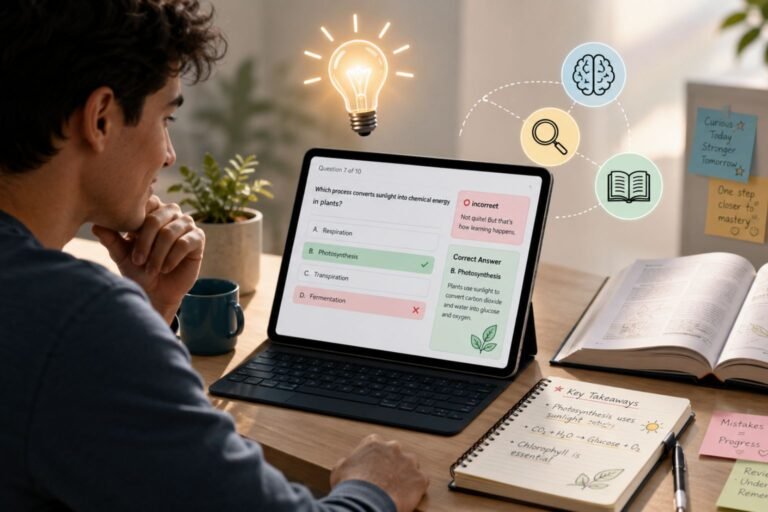
This is a form of recall practice. Instead of instantly letting the answer choices guide you, you try to bring the answer forward from memory. That effort can make the correct fact easier to remember later, especially when you review the explanation after the quiz.
Before the Click
Your brain searches memory and checks the question.
After the Click
Feedback confirms the answer or shows what needs review.
After Review
The idea becomes easier to recall the next time.
How to Use the Pause Method With Easy Questions
Easy questions are the best place to build the habit. When you already know the answer, pause for one or two seconds and quickly explain it to yourself.
For example, if the question asks, “What gas do plants absorb from the air?” and you choose carbon dioxide, quietly confirm why that answer fits. This trains your brain to answer with understanding instead of pure speed. Easy questions become mini confidence checks.
How to Use the Pause Method With Tricky Questions
Tricky questions need a slightly longer pause. First, read the question twice. Then look for words that change the meaning, such as “not,” “least,” “except,” or “before.” After that, compare the answer choices instead of grabbing the first one that looks familiar.
Example
A question may ask, “Which of these is not a mammal?” If you rush, you may choose the animal you recognize most quickly. But if you pause, you notice the question is asking for the exception. That one moment can save you from a careless mistake.
How to Use the Pause Method With Guessed Answers
Guessing is part of quiz learning, especially in daily quizzes and general knowledge challenges. The goal is not to avoid guessing completely. The goal is to make your guess more thoughtful.
Before guessing, pause and remove the choices that seem clearly wrong. Then ask yourself which remaining option best fits the clue. After the quiz, pay close attention to the explanation. A guessed answer becomes useful only when you understand why the correct answer is right and why your guess was right or wrong.
How to Use the Pause Method in Timed Quizzes
Timed quizzes can make people panic-click. That is understandable. When the clock is moving, every second feels important. But pausing does not have to mean wasting time.
⏱️ Use a micro-pause
Take one quick breath, read the question fully, and scan all answer choices before clicking. For easy questions, the pause may be only one second. For harder questions, give yourself a few seconds to eliminate wrong options.
A Simple 3-Step Pause Method
Read the Question Like It Matters
Do not skim only for keywords. Read the whole question and notice what it is actually asking.
Predict Before Studying the Choices
When possible, think of the answer before the choices pull your attention. Use the options to confirm, not replace, your thinking.
Check the Best Choice Against the Clue
Ask, “Does this answer fit every part of the question?” This helps when two choices seem close.
Why This Works Well for Daily Quizzes
Daily quizzes are perfect for the pause before you answer method because they create a small learning routine. You do not need a long study session to improve your focus and memory. A few thoughtful questions each day can help you build better recall habits.
When you take a daily quiz, notice the questions that made you pause. Those questions often reveal what you almost knew, partly remembered, or misunderstood. That gives you a clear starting point for follow-up reading.
For a fun way to practice this habit, try a knowledge quiz today and use the pause method before each answer.
The Pause Method Makes Quizzes More Curious
A good quiz question should do more than test memory. It should make you curious. When you pause before answering, you create space for that curiosity to appear.
You may start asking, “Why is that the answer?” or “What else happened around that event?” or “How is this fact connected to something I already know?” That curiosity is where quiz learning becomes deeper. The question opens the door, but your interest helps you keep walking.
Common Mistakes to Avoid
Overthinking Every Answer
If you know the answer and the question is clear, do not talk yourself out of it. The pause should confirm, not confuse.
Ignoring the Explanation
Pausing improves focus, but understanding grows when you review why the correct answer is right.
Rushing Similar Choices
When two choices look close, the pause helps you compare the clue instead of clicking the familiar option.
Skipping Review After Guessing
A guessed answer becomes useful only when you understand what made the correct answer correct.
The Balanced Truth About Pausing
The pause before you answer method can make quiz learning better, but it is not magic. It will not replace reading, review, explanation, or deeper study. What it does is help you become more aware of your thinking while answering.
That awareness matters. It helps you notice when you truly know something, when you are guessing, and when a familiar answer is pulling you in the wrong direction. When you combine pausing with answer review, educational quizzes become more useful for focus, memory improvement, and daily learning.
Practical Tips for Better Quiz Learning
- Use a one-second pause for easy questions.
- Use a three-to-five-second pause for tricky questions.
- Read every answer choice before clicking.
- Watch out for small words that change the question.
- Review questions you guessed, rushed, or got wrong.
- Write down one fact you learned after each quiz.
10 FAQs About the Pause Before You Answer Method
1. What is the pause before you answer method?
It is the habit of taking a short moment before choosing a quiz answer. It helps you read carefully, notice clues, compare choices, and avoid careless mistakes.
2. How long should I pause before answering?
For easy questions, one or two seconds may be enough. For tricky questions, take a few more seconds to read carefully and check the choices.
3. Does pausing help with memory improvement?
Yes. It encourages recall practice by giving your brain a chance to remember the fact before relying on familiar answer choices.
4. Is this method useful for timed quizzes?
Yes. Use a quick micro-pause. Read the full question, scan the choices, and then answer with focus.
5. Can pausing make me overthink my answers?
It can if you pause too long. The goal is not to second-guess everything. The goal is to confirm the question and answer with better focus.
6. How does this help with tricky answer choices?
Pausing gives you time to compare similar choices and notice words like “not,” “except,” “first,” or “largest.”
7. Should I pause even when the answer is obvious?
Yes, but only briefly. A quick pause builds careful reading and helps prevent mistakes when an easy-looking question has a twist.
8. What should I do when I still have to guess?
Pause, remove clearly wrong choices, and make the best guess based on the clue. Then review the explanation after the quiz.
9. Is the pause method only for students?
No. It works for students, casual learners, adults, trivia fans, and anyone who enjoys educational quizzes or general knowledge challenges.
10. What matters most after pausing and answering?
Review matters most. Pausing helps you answer more thoughtfully, but real understanding grows when you read the explanation and understand why the answer is correct.
Summary
The pause before you answer method is a simple way to make quiz learning more thoughtful. Instead of rushing toward the first familiar choice, you give your brain a small space to read, recall, compare, and confirm.
That pause can help you avoid careless mistakes, notice clues, improve focus, and strengthen memory through recall practice. Use a short pause for easy questions, a longer pause for tricky ones, and a quick micro-pause during timed quizzes.
Most importantly, review the explanations afterward. A pause can help you answer better, but understanding grows when you learn why the answer is correct.