The Learning Lantern: Using Questions to See What You Didn’t Notice Before
Some lessons feel clear at first. You read the page, watch the video, listen to the explanation, and think, “Okay, I get it.”
Then someone asks one simple question.
Suddenly, you notice a detail you skipped. A connection appears. A confusing part becomes clearer. Something that looked ordinary starts to feel important.
That is the power of what we can call the Learning Lantern.
✨ Learning reminder: A good question works like a lantern in a dark room. It does not create the room, but it helps you see what was already there.
A thoughtful question shines light on hidden details, missing links, weak assumptions, and deeper meaning. Learning is not only about collecting answers. Often, real understanding begins when we learn how to ask better questions.
What Is the Learning Lantern?
The Learning Lantern is the habit of using thoughtful questions to guide your attention.
Instead of rushing through a topic and trying to memorize everything, you pause and ask questions that help you notice more.
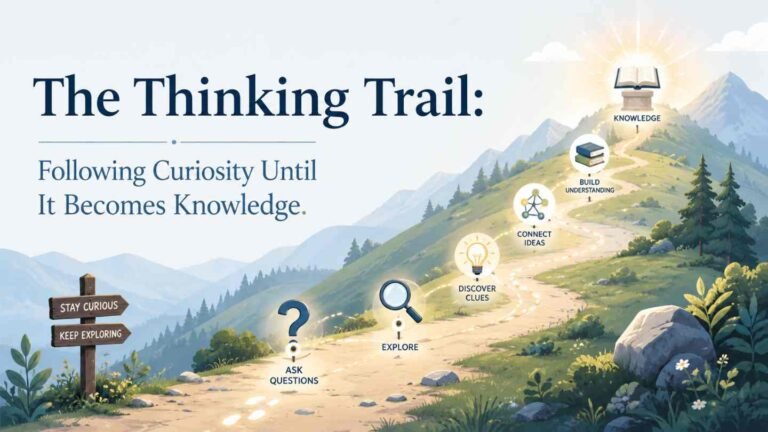
These questions act like a light. They help learners move from surface understanding to deeper understanding.
A student may know a fact. But when that student asks why the fact matters, where it fits, and how it connects, the fact becomes meaningful. That is when learning starts to stick.
Why Questions Help Us Notice More
The mind naturally filters information. When you read, listen, or observe, you cannot pay attention to everything at once. Some details stand out, while others quietly disappear into the background.
Questions change what your mind looks for.
Simple example: If you read a story and ask, “What happened?” you will notice the plot. But if you ask, “Why did the character make that choice?” you begin to notice motives, emotions, conflicts, and consequences.
Same topic. Different question. Deeper learning.
Questions train your attention. They tell your brain, “Look here. This might matter.”
Questions Improve Focus
Many learners struggle with focus because they are trying to absorb too much at once. A thoughtful question narrows the target.
Instead of saying, “I need to understand this whole chapter,” try asking:
What is the main idea of this section?
What is one example that explains it clearly?
Which part still feels unclear?
What would I ask the teacher about this?
These questions give your mind a job. They turn passive reading into active searching.
When your brain is looking for something specific, it becomes easier to stay engaged.
Questions Spark Curiosity
Curiosity often begins with a gap. You notice something missing, strange, surprising, or unfinished. Then your mind wants to know more.
Good questions open that gap in a useful way.
A simple question can turn an ordinary topic into a small mystery. That mystery pulls the learner forward.
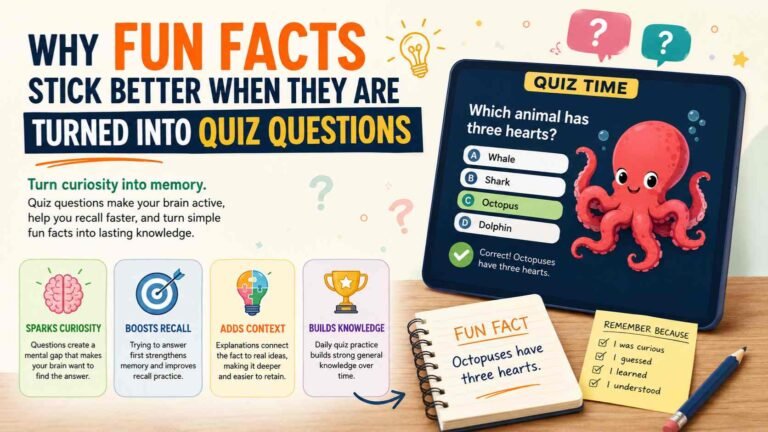
This is why quizzes, puzzles, and challenges can be powerful learning tools. They invite the brain to search, guess, compare, and remember. You can explore more curiosity-building learning activities through a knowledge quiz bing resource that encourages question-based discovery.
Questions Strengthen Memory
Memory improves when information has meaning.
If you only memorize a fact, it may fade quickly. But when you connect that fact to a question, example, image, or personal experience, it becomes easier to remember.
Instead of only memorizing:
“Photosynthesis is the process by which plants make food.”
Ask deeper questions:
Now the idea has more hooks. It connects to light, leaves, air, food, and life.
Questions create mental pathways. The more pathways you build, the easier it is to return to the idea later.
Questions Reveal Hidden Details
Some of the most important parts of learning are easy to overlook.
A tiny word in a math problem can change the operation. A small date in history can explain a major event. A minor detail in a science experiment can affect the result. A quiet phrase in a story can reveal the theme.
The Learning Lantern helps you slow down and notice those details.
What small detail changes the meaning?
What part seems easy to ignore but might be important?
What clue did I almost skip?
What pattern appears more than once?
These questions are especially useful in reading, research, problem-solving, and test preparation. Often, the answer is hiding in plain sight.
Questions Help You Find Missing Connections
Understanding grows when ideas connect. A learner may know several facts separately, but still feel confused because the connections are missing.
For example, a student might know about rainfall, rivers, farming, and population growth. But the deeper understanding comes when they ask:
Suddenly, separate facts become a network.
Questions help learners build bridges between ideas. They turn scattered information into organized understanding.
Questions Make Unclear Ideas Easier to Handle
Confusion is not always a bad sign. Sometimes confusion means your brain has reached the edge of what it understands.
The key is not to panic. The key is to ask better questions.
Instead of saying, “I don’t understand this,” break it down:
Which word is confusing?
Which step lost me?
What example would make this clearer?
What do I understand so far?
What is the first part that does not make sense?
This makes confusion smaller and more manageable. A big unclear topic becomes a set of smaller questions. And smaller questions are much easier to answer.
Questions Improve Problem-Solving
Problem-solving depends on seeing the situation clearly.
Many mistakes happen because learners rush to answer before they fully understand the problem. The Learning Lantern slows the process just enough to reveal what matters.
What is the problem really asking?
What information is given?
What information is missing?
Have I seen a similar problem before?
What strategy might work here?
This works in math, science, writing, business, decision-making, and everyday life. A good question can prevent a wrong turn.
Practical Examples of the Learning Lantern
In Reading
Instead of only asking, “What is this paragraph about?” ask: What is the author trying to make me notice? What idea is repeated? What emotion or message is hidden underneath the words?
In Science
Instead of only memorizing a definition, ask: What causes this? What would happen if one part changed? Where can I see this in real life?
In History
Instead of only remembering dates, ask: Why did this event happen? Who benefited? Who was affected? What changed afterward?
In Math
Instead of asking, “What is the formula?” ask: Why does this formula work? What does each number represent? Can I draw or visualize the problem?
In Daily Life
Ask: What am I not seeing? What assumption am I making? What pattern keeps repeating? What small change could improve this?
How to Ask Better Learning Questions
Better questions are usually clear, specific, and open enough to invite thinking.
Do I understand this?
Can I explain this idea in my own words with one example?
Is this important?
Why does this detail matter to the bigger idea?
What is the answer?
How can I figure out the answer step by step?
Better questions do not always need to be complicated. They just need to point your attention in the right direction.
Simple Learning Lantern Questions to Use Anytime
Here are helpful questions you can use with almost any topic:
These questions help learners slow down, look closer, and think more deeply.
Why Meaningful Understanding Matters
There is a big difference between knowing information and understanding it.
You can repeat something.
You can explain it, use it, connect it, question it, and recognize it in a new situation.
The Learning Lantern helps learners move toward that deeper level.
It teaches them not only to ask, “What is the answer?” but also: Why is this answer true? How did we get here? What does it connect to? Where can this idea be used?
That is meaningful learning.
FAQ About the Learning Lantern
What is the Learning Lantern?
The Learning Lantern is a simple learning method that uses thoughtful questions to help learners notice details, connections, and deeper meaning in any topic.
Why are questions important in learning?
Questions guide attention. They help learners focus, explore, remember, solve problems, and understand ideas more deeply.
Can this method help with difficult subjects?
Yes. Asking specific questions can break confusing topics into smaller, clearer parts. This makes difficult subjects easier to manage.
How does asking questions improve memory?
Questions connect facts to meaning, examples, and prior knowledge. These connections make information easier to remember and recall.
What is a good question to ask when learning something new?
A strong starting question is: “What is the main idea, and why does it matter?” This helps you focus on both meaning and importance.
A Little Light Can Change the Lesson
Thoughtful questions are small, but they can change the way we learn.
They help us notice hidden details, uncover missing connections, organize unclear ideas, and discover deeper meaning. They improve focus because they give the mind direction. They build curiosity because they turn learning into exploration. They strengthen memory because they connect facts to meaning.
The Learning Lantern reminds us that every topic has more to reveal when we ask the right questions.
Sometimes the lesson is already in front of us. We just need a little light to see it.
Final thought: Better questions do not only help you find answers. They help you see the lesson more clearly.