Wrong Quiz Answers: Learn Faster from Mistakes
Most people love getting quiz questions right. Of course they do. A correct answer feels like a tiny victory lap for the brain — that satisfying little moment when you silently think, “Yes, I still have it.”
But here is the surprising part: your wrong quiz answers may teach you more than your correct ones.
Not because being wrong is fun. Nobody enjoys confidently choosing “Venus” when the correct answer is “Mars.” That little sting is real. But that sting is also useful. It grabs your attention in a way a textbook paragraph often cannot.
A textbook gives you information.
A quiz shows what your brain actually did with that information.
Why Wrong Quiz Answers Are So Powerful
When you read a textbook, you may feel like you understand the topic. The words make sense. The examples are clear. You nod along. Everything feels smooth.
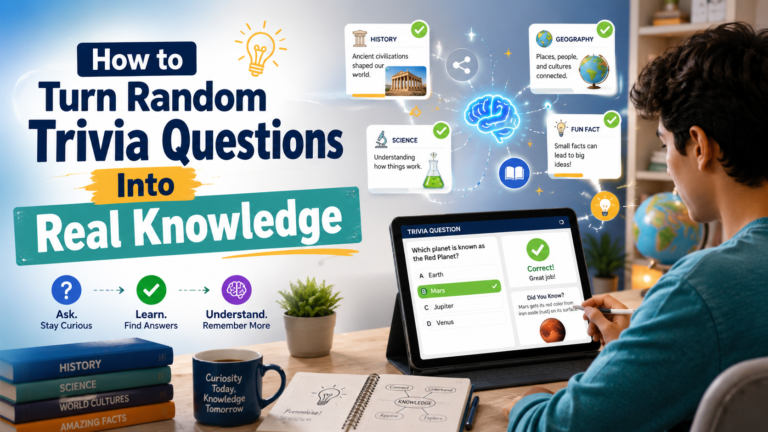
Then a quiz asks: Which planet is known as the Red Planet?
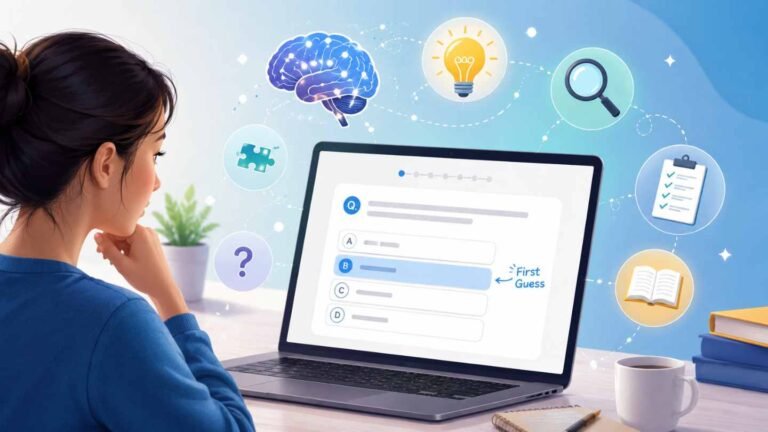
Suddenly your brain has to work. It cannot simply recognize information. It must retrieve it. That is where learning becomes real.
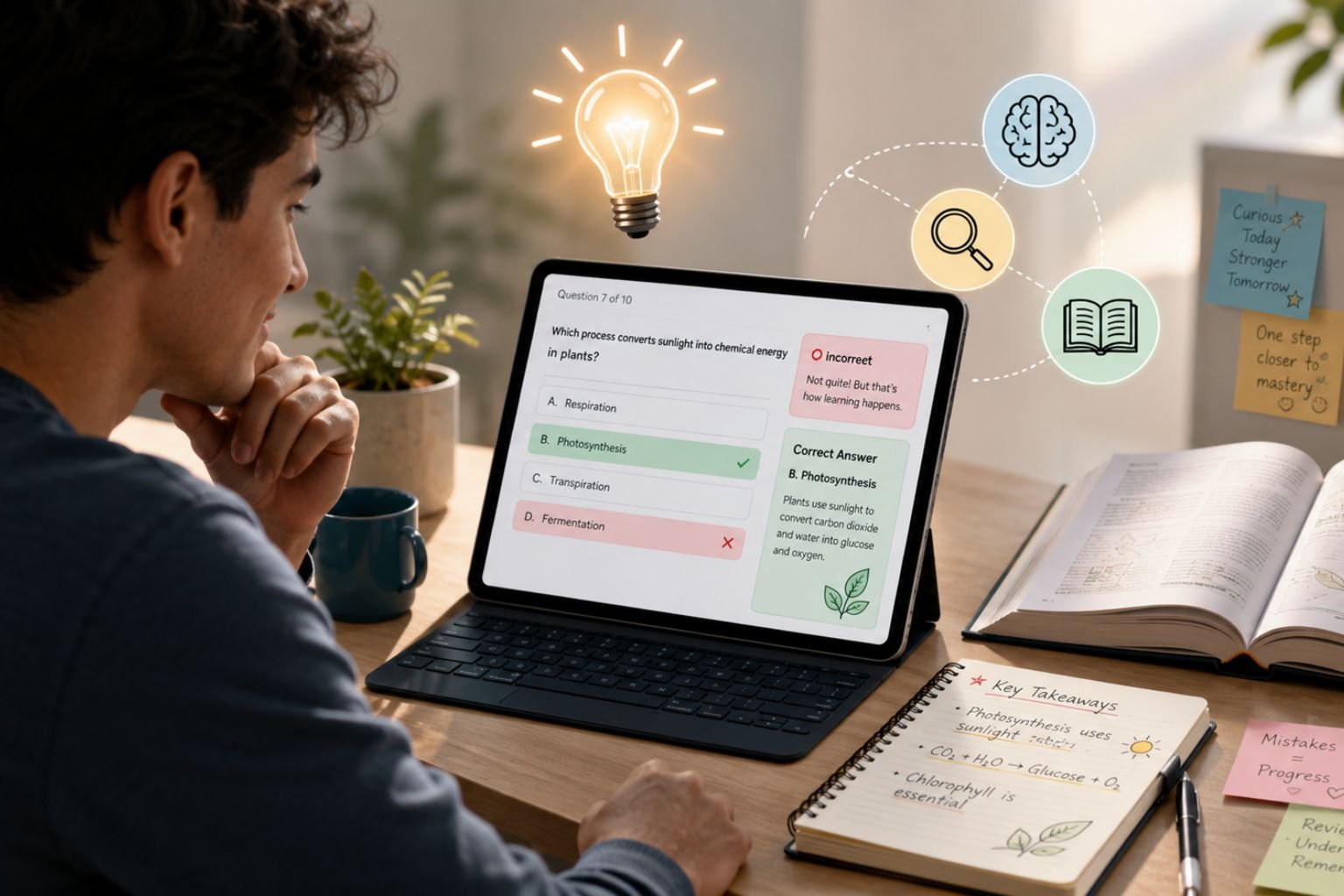
A wrong answer tells you something specific. Maybe you confused two facts. Maybe you remembered a clue incorrectly. Maybe you rushed. Maybe you trusted an answer only because it sounded familiar. That is why quiz learning is powerful: it turns vague weakness into a clear learning target.
A Textbook Explains. A Quiz Exposes.
Textbooks are useful. No argument there. They move in a clear line: chapter one, chapter two, chapter three. You read, highlight, maybe take notes, and everything feels organized.
Quizzes are different. They interrupt your comfort. They ask, “Do you really know this?”
You may read about world capitals and feel confident. Then a quiz asks for the capital of Canada, and you choose Toronto instead of Ottawa. That mistake teaches you something fast: you were relying on popularity, not accuracy.
Toronto is famous, but Ottawa is the capital. That one wrong answer may stay in your memory longer than a full textbook page.
Wrong Answers Create a Memory Hook
Here is why mistakes can improve memory. When you get something wrong, your brain notices the gap between what you expected and what was true. That surprise makes the correction more memorable.
Think of it like stepping on a loose floor tile. You remember exactly where it is next time.
This is one reason educational quizzes are useful for students, trivia fans, and lifelong learners. They do not only test knowledge. They create little memory hooks that say, “Pay attention here. This is the part you thought you knew.”
The Best Wrong Answers Reveal Your Thinking Pattern
Not all wrong answers are the same. Some mistakes happen because you never learned the fact. Fair enough. But many wrong answers reveal a pattern — and once you see the pattern, you can fix the problem faster.
You confused similar facts
This happens often in history, science, geography, and literature. You know the topic, but the details are tangled. If you choose Edison when the answer is Alexander Graham Bell, the issue is not total ignorance — it is confusion between related people.
You trusted a familiar word
Sometimes the wrong option looks familiar, so you pick it. If a question asks for the largest ocean and you choose Atlantic because you hear it often, your brain followed familiarity instead of retrieving the fact.
You rushed the question
This one is sneaky. You know the answer, but you miss one important word like not, except, or least. That does not always mean you need to study harder. Sometimes you simply need to slow down.
You ignored the clue
Many quiz questions contain hints inside the wording. If a science question mentions evaporation, condensation, and precipitation, those words are already pointing toward the water cycle.
How Daily Quizzes Build General Knowledge
A long textbook can feel heavy. A short daily quiz feels manageable. That is why daily quizzes work well for building general knowledge. You do not need to master everything in one sitting. You answer a few questions, check your mistakes, and learn one small thing at a time.
Today you learn a capital city.
Tomorrow you remember a famous inventor.
Next week you finally stop mixing up meteors, meteorites, and meteoroids.
Tiny wins. Tiny corrections. Big improvement over time. A quiz can fit into a coffee break, lunch break, commute, or evening scroll — and unlike passive scrolling, it makes your brain participate.
The “Mistake Review” Method
Getting a question wrong is only useful if you review it properly. Do not just glance at the correct answer and move on. Try this simple method instead.
Step 1: Ask why you chose the wrong answer
Was it a guess? Did the wrong answer sound familiar? Did you confuse two names, dates, places, or terms? This takes only a few seconds, but it changes everything.
Step 2: Rewrite the correct fact in your own words
Do not copy a long explanation. Make it simple.
Correct answer: Ottawa
Memory note: Ottawa is Canada’s capital; Toronto is the biggest city.
Step 3: Connect it to something you already know
Memory likes connections. For example: Ottawa is the capital of Canada, and Washington, D.C. is the capital of the U.S. Both are political centers, not necessarily the biggest cities.
Step 4: Test yourself again later
A wrong answer becomes useful when you meet it again and finally get it right. That second attempt strengthens memory.
Why Mistakes Feel Embarrassing but Help Learning
Let us be honest. Wrong answers can feel annoying. You may think, “I should have known that.”
But that feeling is often a sign that learning is happening. A mistake wakes up your attention. It breaks the illusion of knowing. It gives your brain a reason to store the correction.
Learning is not always smooth. Sometimes it is a little bumpy. That is fine. Bumps make the road memorable.
Practical Tips to Learn More from Wrong Quiz Answers
📝 Keep a wrong-answer list
You do not need a fancy notebook. A phone note works. Write the topic, your wrong answer, and the correct answer. Keep it short and review it once or twice a week.
📚 Group mistakes by topic
After a few quizzes, patterns appear. Maybe geography questions trip you up. Maybe science terms are slippery. Maybe history dates run away from you like unpaid bills.
✨ Turn mistakes into mini-lessons
If you miss a question about the Great Wall of China, spend two minutes learning one extra fact about it. Not a full research project. Just one useful detail.
🔥 Use daily quizzes as warm-ups
A daily quiz is a great way to wake up your brain. You do not have to score perfectly. The goal is to practice recall, notice gaps, and stay curious.
The best moment is not getting everything right the first time. The best moment is seeing a question again and thinking: “Wait, I missed this before. Now I know it.”
Why Curiosity Matters More Than Perfect Scores
A perfect score feels nice, but curiosity lasts longer. When you treat wrong answers as clues, quizzes become more than entertainment. They become a simple way to explore the world.
One question can lead you to history. Another to science. Another to music, animals, sports, famous people, inventions, literature, or geography. That is the beauty of general knowledge: it keeps opening doors.
The goal is not to know everything. Nobody does. The goal is to keep learning without making it feel like punishment.
How Quiz Websites Can Make Wrong Answers More Useful
For a quiz website, the learning experience should not end when the score appears. A good quiz can turn every missed question into a helpful learning moment.
✅ Clear explanations
A correct answer is helpful. A short explanation is better. One sentence can clear up a common mistake.
💬 Friendly feedback
Use encouraging lines like “Close! Many people mix these up” or “Good guess, but here is the key difference.”
🔄 Replay value
Let readers retake quizzes or try similar questions later. Repetition helps memory, especially after a missed answer.
🎯 Mixed topics
History, science, geography, entertainment, sports, language, and daily facts keep learning flexible and fun.
The Real Lesson Behind Wrong Quiz Answers
A wrong answer is not just a red mark. It is a message. It says, “You are close, but this part needs another look.”
Textbooks can teach you a subject from the outside. Quizzes reveal your understanding from the inside. When you combine both, learning becomes stronger.
📖 Read when you need depth.
🧠 Take quizzes when you need recall.
✨ Review wrong answers when you want fast improvement.
FAQs About Wrong Quiz Answers
1. Are wrong quiz answers actually good for learning?
Yes. Wrong quiz answers help you see exactly what you misunderstood, forgot, or confused. When you review the correction, your brain is more likely to remember it because the mistake created attention.
2. How can quizzes improve memory?
Quizzes improve memory by forcing your brain to recall information instead of only reading it. This active recall strengthens learning, and reviewing missed questions makes the effect even stronger.
3. Should I retake quizzes after getting answers wrong?
Yes. Retaking a quiz after some time helps you check whether the correction stayed in your memory. It is better to wait a little before retaking, so your brain has to work again.
4. What types of quizzes are best for general knowledge?
Mixed-topic quizzes are great for general knowledge because they cover many areas, such as history, science, geography, literature, entertainment, and current facts. Daily quizzes are especially useful because they build learning into a simple habit.
Final Thoughts
Your wrong quiz answers are not proof that you are bad at learning. They are signposts. Each one points to a small gap, a mixed-up fact, or a rushed decision. Once you notice the pattern, you can fix it faster.
That is why quizzes are more than games. They are quick learning tools. They test your memory, sharpen your attention, and make curiosity feel active.
So the next time you miss a quiz question, do not just sigh and move on. Pause. Ask why you missed it. Read the correction. Make a tiny memory note. That wrong answer might teach you faster than a whole textbook page.